

Student Ranger 2026
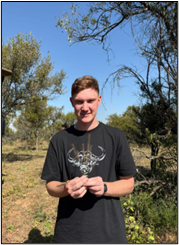
Hi my name is Divan. I am one of the new student rangers at Fransmanshoek conservancy. I have had an interest in nature and protecting it from a young age. This is my 5th year of studying nature management and I’m looking forward to completing my WIL year at Fransmanshoek.
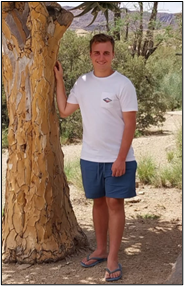
Hi, my name is MC Prins. I am starting my WIL year as one of the new student Rangers at Fransmanshoek. Originally from Paarl, I always had an interest in the environment ever since I was young which led me to study nature conservation after school. This has led me to Fransmanshoek where I am doing my practical or WIL year. I am looking forward to the year and I hope to leave Fransmanshoek in a better state than in which I found it.
Farewell to Head Ranger Erich Goold. 2020-2026
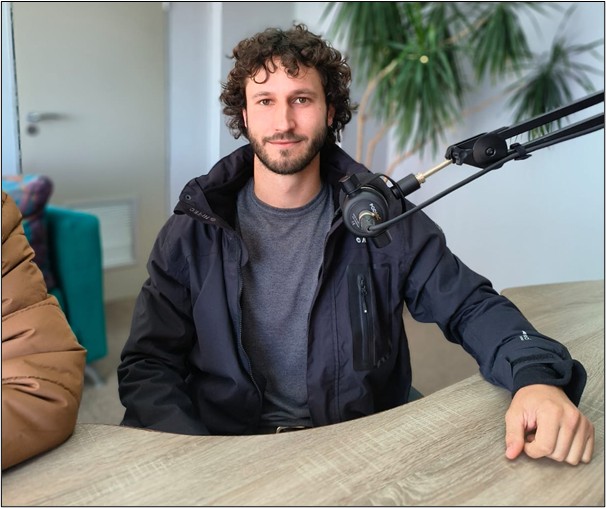
Farewell to Head Ranger Erich Goold. I have had the Honour to be the Head Ranger at Fransmanshoek Conservancy since 2020. It is with great sadness that I have resigned from my position to pursue my next adventure.
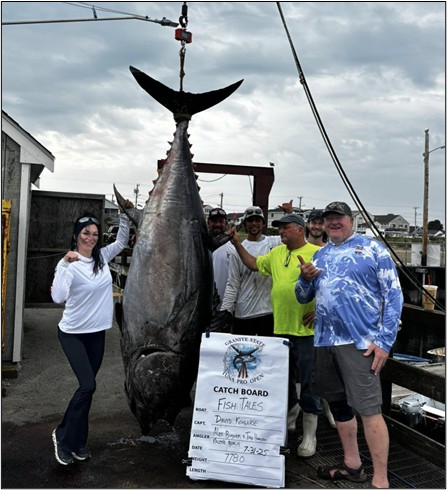
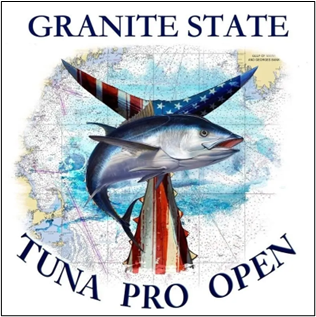
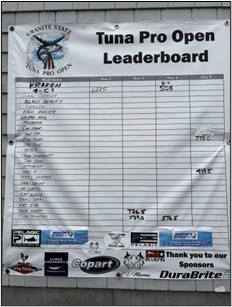
During 2025 I spent some time visiting friends in the USA to promote our conservation efforts at FMH. We were fishing for Big Blue Fin Tuna. During my time there we were successful in catching two Fish, the first one was part of the Granite State Tuna Pro Open. A Competition in which we won First Prize for our catch of a 1000 Pound Tuna.
There are Big fish in the ocean and I want to go see for myself.
Thank you to everyone in this Community for your support over the years and dedication to Conserving this beautiful coastline in the Garden Route.
Fransmanshoek Conservancy is a truly special place. I will miss it.
Compliance Management
Marine Living Resources Act
During January, the Rangers came across a total of 17 -fishermen, recreational fishing, 0 spearfishing/diving, and—0 bait collecting permits were inspected by Divan, MC -and Erich in accordance with the Marine Living Resources Act (Act 18 of 1998). Of the 16 -permits checked, —1 (6 %) failed to produce a valid permit. We remind everyone that it is essential to be in possession of a permit, even if you are simply fishing for a day or two! We ask that if you witness any fishermen, divers, or bait collectors and suspect they are not following the rules and regulations, please get in touch with the Conservancy immediately
Natural Resource Management
Protecting Marine Species
Due to the conservancy’s close proximity to the ocean, we are always involved in management and especially the protection of our marine resources.
For many many years now the Fransmanshoek area has been a popular site for fishing and the collecting of other marine species, as indicated by the various shell middens, such as marine molluscs such as limpets, mussels and periwinkle. Unfortunately, these resources are not as plentiful as they once were. Therefore one of the responsibilities of the Fransmanshoek Conservancy is to ensure that these resources are utilised in a sustainable manner in order to ensure that they are still present for future generations.
One way the conservancy helps to protect these resources is by ensuring that all collection and or harvesting of any marine resource, this includes fishing and bait collection, is done in an ethical and sustainable manner. How we go about this in regards to specifically fishing and the collection of animals and bait is by ensuring that the individuals who do come to Fransmanshoek for this purpose have adequate licenses. As well as within determined bag limits, size limits and that no protected species are being harvested or targeted.
The licenses and their parameters that are issued by the Department of Forestry, Fisheries and the Environment (DFFE) are usually backed by and determined through the latest scientific research. This helps to ensure that these marine resources are harvested in the most sustainable way possible. An example of this is how the parameters set by quotas as well as the creation of marine protected areas, which included ‘no – take zones’ has prevented South African hake stocks from collapsing and has actually allowed the species to start recovering and grow in number again.
It is therefore important that a conservancy such as Fransmanshoek can play a role in the protection and the conservation of our marine resources in order to not only protect our marine heritage but also to ensure the sustainability thereof.
Lets ensure that these resources are still there for our children one day so that they may also benefit from the bounty of the sea just like those ancient people many many years ago. Who knows? Maybe we will have shell middens of our own one day.

Environmental Education
The Importance of a fishing permit
Having a fishing permit is very important for you as an angler and the fish in the ocean. A permit is important for legal reasons. When you have a fishing permit, you have agreed that you know what the rules and regulations are and you will adhere to these rules and regulations. Sustainable fishing is also very important. If all the fish are caught at one time, no fish will be left. This is why we have rules and limits on the fish that are being caught and the size of the fish. Having rules helps us to keep fish populations healthy, making it possible for all of us to catch fish.
When paying for a fishing permit, a lot of us wonder where the money goes. The money from your fishing license goes to the Marine Living Resources Fund. This money is then used to assist in managing the search for permits and addressing any illegal fishing activities. It will also be used to do research on fish populations and the health of the ecosystem. This can show us if we can increase bag limits or maybe decrease bag limits.
To get a fishing permit, it can now be done online and is a lot easier than it seems. When getting your fishing permit online click on the link.
After opening the website, scroll down to the bottom of the page and click on the Recreational Permit at the bottom right of the page. Look at the first image below for guidance. You will then have to log in to your account or create an account.
After you are logged in, you will look at the left side of the page and click on the last option with all the lines. In the picture below, it can help you find your way to a fishing permit.

Monthly Species Profile
Blue glaucus
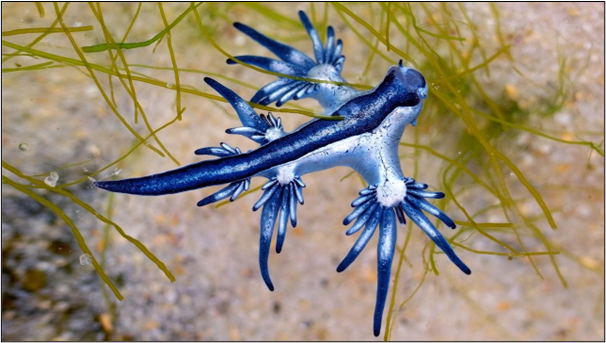
Scientific name: Glaucus atlanticus
Family: Glaucidae
Description: Grow up to 3 cm long but can potentially grow larger. The dorsal side of the body is brightly coloured and the most noticeable with its dark blue, gray and white stripes. The ventricle side is dark and light blue. It has a flat body with six appendages that branch out into finger – like cerata
Distribution: Has been found throughout the world but primarily in Europe and Africa. There are also sightings in Australia and the Americas. Historically they are usually sighted in the Atlantic Ocean. They were also, ironically, spotted at dragon dune in Fransmansek.
Habitat: They inhabit the open ocean but also near shores where they occasionally wash up on beaches where they are usually sighted.
Diet: The blue sea dragon feeds only on venomous creatures such as the Portuguese Man O’ War. They are not affected by the poison. They consume their prey using a set of sharp serrated teeth
Reproduction: Despite having both male and female reproductive organs also known as hermaphrodites they must mate with another member in order to create fertilized eggs since their self-contained eggs and sperm are incompatible. To find a mate they simply float along until they find another mate. When mating they need to take extreme caution because they are poisonous. After mating both individuals can lay a row of 20 eggs. The eggs take 3 days to hatch onto larvae
Conservation Status: Due to it being such a small animal it is very difficult to estimate the population size and if it is growing or shrinking. They have been found in new places like Taiwan but this can also be due to climate change or even storms.
References
Codeadmin, & Codeadmin. (2022, April 21). Meet the Blue Dragon. Ocean Conservancy.
https://oceanconservancy.org/blog/2022/04/21/meet-blue-dragon/
Divan Breet
MC Prins
Erich Goold
FRANSMANSHOEK CONSERVANCY
082 084 2791 | fransmanshoek@gmail.com