
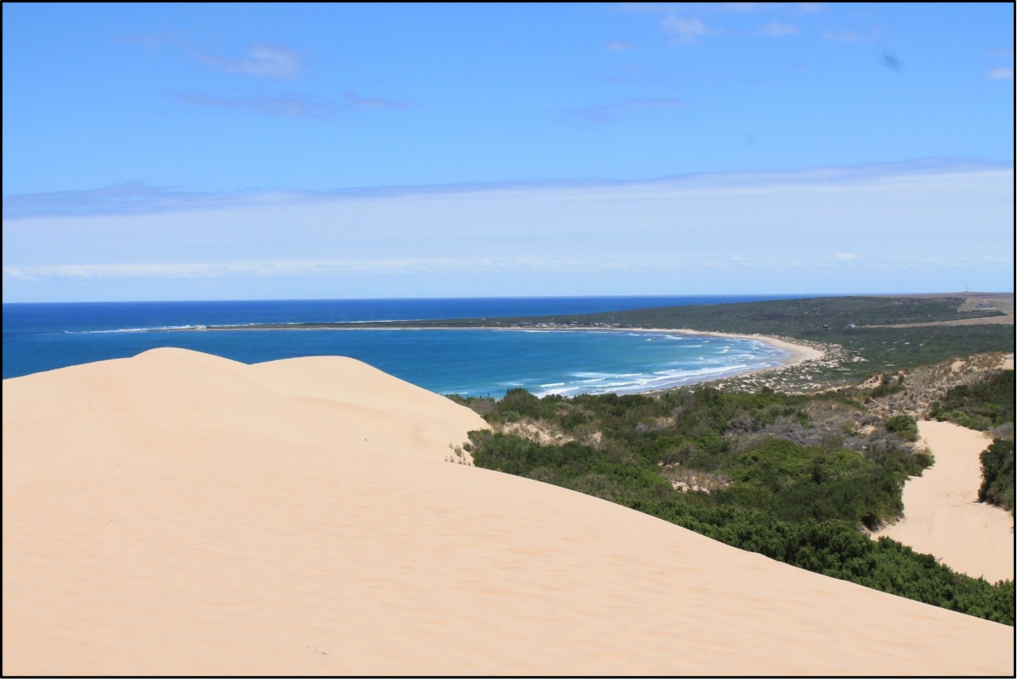
“The environment is where we all meet; where we all have a mutual interest; it is the one thing all of us share.” – Lady Bird Johnson.
Compliance Management
Marine Living Resources Act
During November, the Rangers came across a total of 23 fishermen, recreational fishing, spearfishing/diving, and bait collecting permits were inspected by Bernard, Hayley, and Ethan in accordance with the Marine Living Resources Act (Act 18 of 1998). Of the 23 permits checked, none failed to produce a valid permit. We remind everyone that it is essential to be in possession of a permit, even if you are simply fishing for a day or two! We ask that if you witness any fishermen, divers, or bait collectors and suspect they are not following the rules and regulations, please get in touch with the Conservancy immediately.
Natural Resource Management
Fire Fighting Training Day
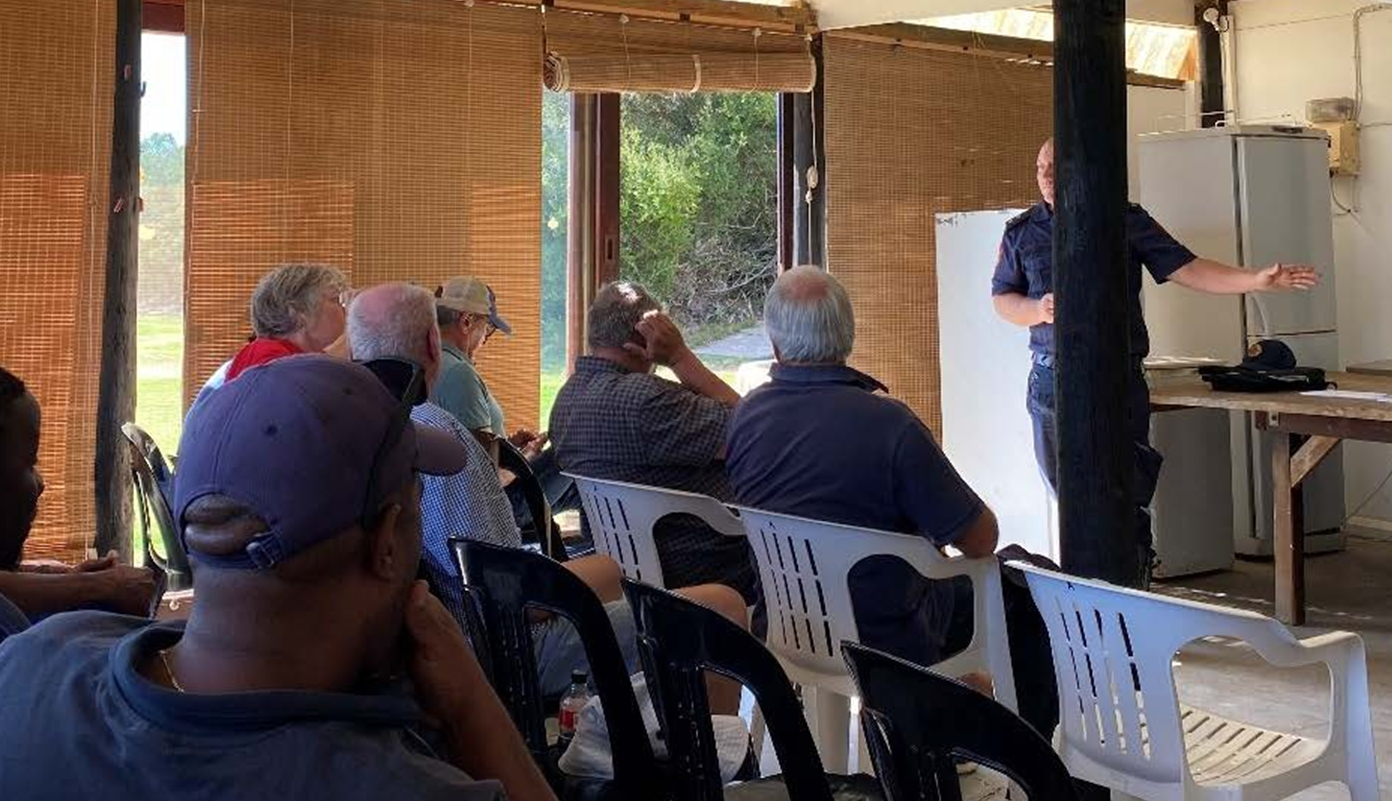
On the 5th of November, the Fransmanshoek Conservancy Rangers, together with members of the local community, had the opportunity to participate in a Basic Firefighting Training Day hosted by the Garden Route District Municipality Fire Department. The training formed part of ongoing efforts to strengthen preparedness and enhance response capabilities for potential veldfire incidents within our region.
The day commenced with a theoretical session, during which participants explored critical topics including fire behaviour, ignition patterns, and the principles of fire spread. Emphasis was placed on essential safety protocols, the importance of early detection, and the role of effective communication during emergencies. Participants also gained insight into the strategic aspects of wildfire management, including rapid response techniques and coordinated efforts to protect both natural habitats and local communities.
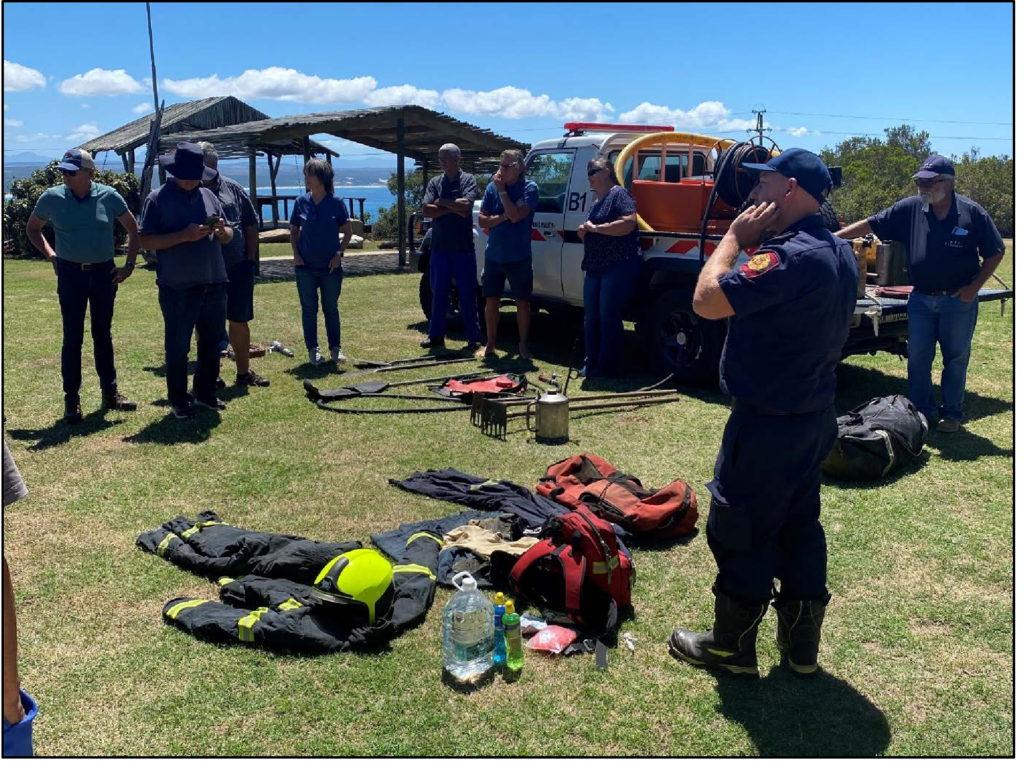
Following the classroom component, the training shifted to a practical, hands-on session, where participants were introduced to standard firefighting equipment. This included fire beaters, water pumps, and other essential tools, alongside proper use of personal protective equipment (PPE). The Fire Department team demonstrated correct handling procedures and supervised each participant as they practiced operating the equipment, ensuring that all attendees developed both competence and confidence. These exercises were invaluable in reinforcing safety and operational efficiency during veldfire response.
The Fransmanshoek Conservancy extends sincere gratitude to the Garden Route District
Municipality Fire Department for facilitating this comprehensive training. By equipping our Rangers and community members with both theoretical knowledge and practical skills, the session has strengthened local capacity to respond effectively and safely to wildfire events, ultimately contributing to the protection of our environment and community.
Boggomsbaai Mural
Earlier this year, the Fransmanshoek Conservancy Rangers were approached by residents of Boggomsbaai with a fun challenge: could we help bring a bit of colour and creativity back into one of their public spaces? There’s been a growing trend in the area of using murals to brighten up community spots, Danabaai’s mural being a great example, and the locals hoped to do something similar that would also celebrate the natural beauty around them. The structure chosen for the project was an older roofed shelter near the parking area. it once held information boards, but after years of sun, wind, and salt spray from the ocean, it had lost much of its original charm. The idea was to turn it into something fresh and meaningful by showcasing the plants and animals that people in Boggomsbaai are so proud of.
When we first took a closer look at the building, it was clear that the walls needed some attention before a single line of paint could be added. With the help of the Mossel Bay Municipality, repairs were done quickly, and soon we had a solid, clean surface to work with.
At the start of November, the paint tins finally opened. Student Rangers, Bernard van Heerden and Hayley Thorpe, took the lead, slowly transforming the once-plain walls into a lively celebration of local biodiversity. Over the weeks, shapes and colours came together: the unmistakable African Black Oystercatcher, a graceful Cape Bushbuck, the elegant Blue Crane, and even a Common Dolphin riding a wave. Bright Pincushion Proteas and cheerful Bietou added that final burst of fynbos flair.
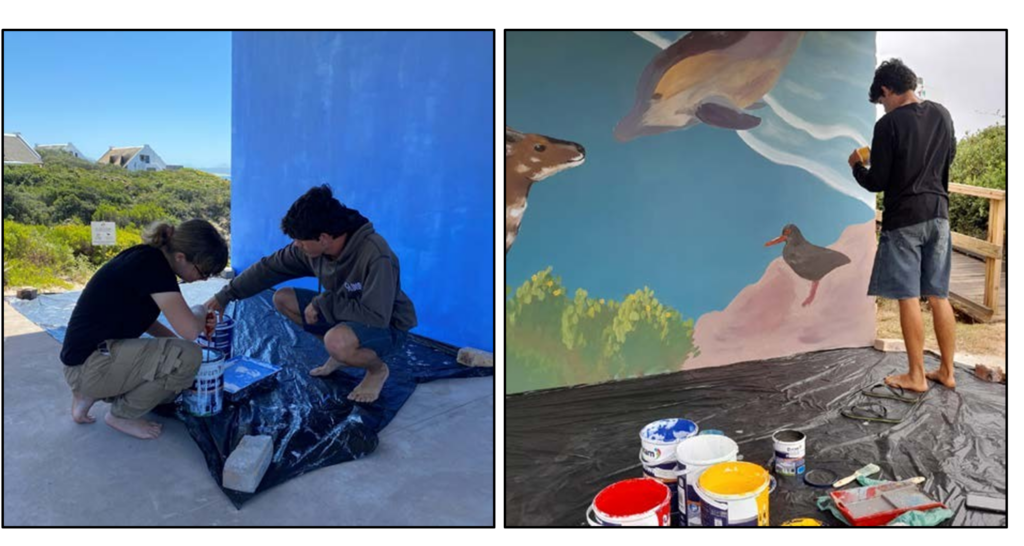
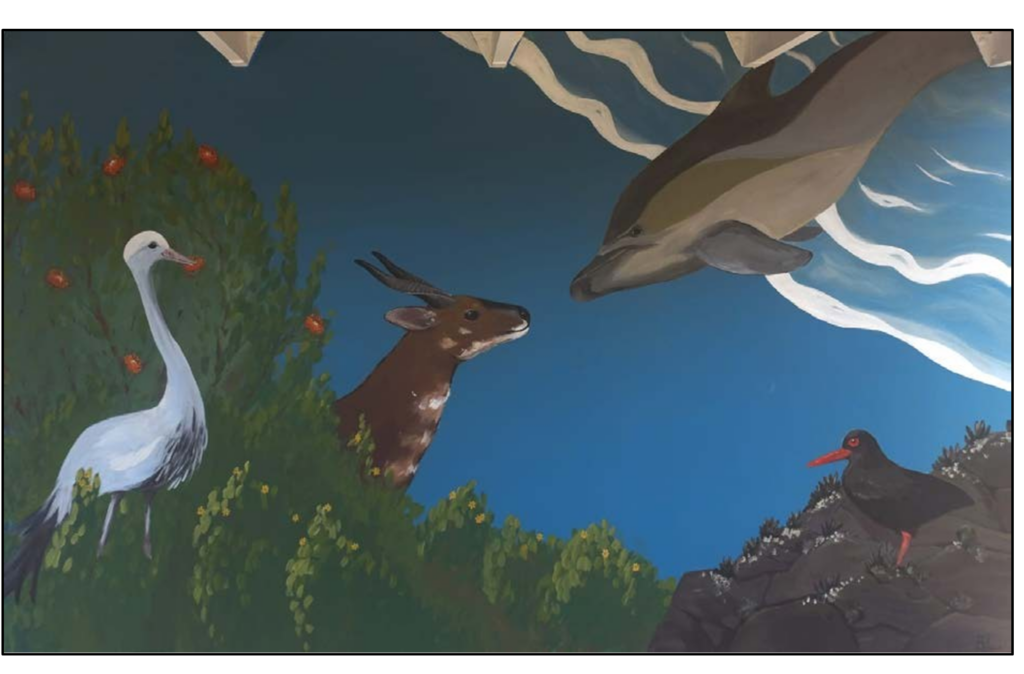
By the 24th of November, the mural was complete, and the structure looked nothing like the tired structure we first saw. It now stands as a colourful reminder of what makes this coastline so special. We encourage everyone passing by to enjoy the artwork, respectfully, of course, and take a few photos to share the beauty of Boggomsbaai with others.
Environmental Education
Coastline Caution: Protecting Yourself and Wildlife This Festive Season
As the festive season arrives and our coastlines fills with holidaymakers, it’s important to remember that we share these shores with wildlife that may be facing serious health challenges. This year, both rabies in Cape fur seals and avian influenza in coastal bird species continue to pose risks. Increased visitor numbers during the holiday season often result in closer human-wildlife interactions, making public awareness essential for both safety and conservation.
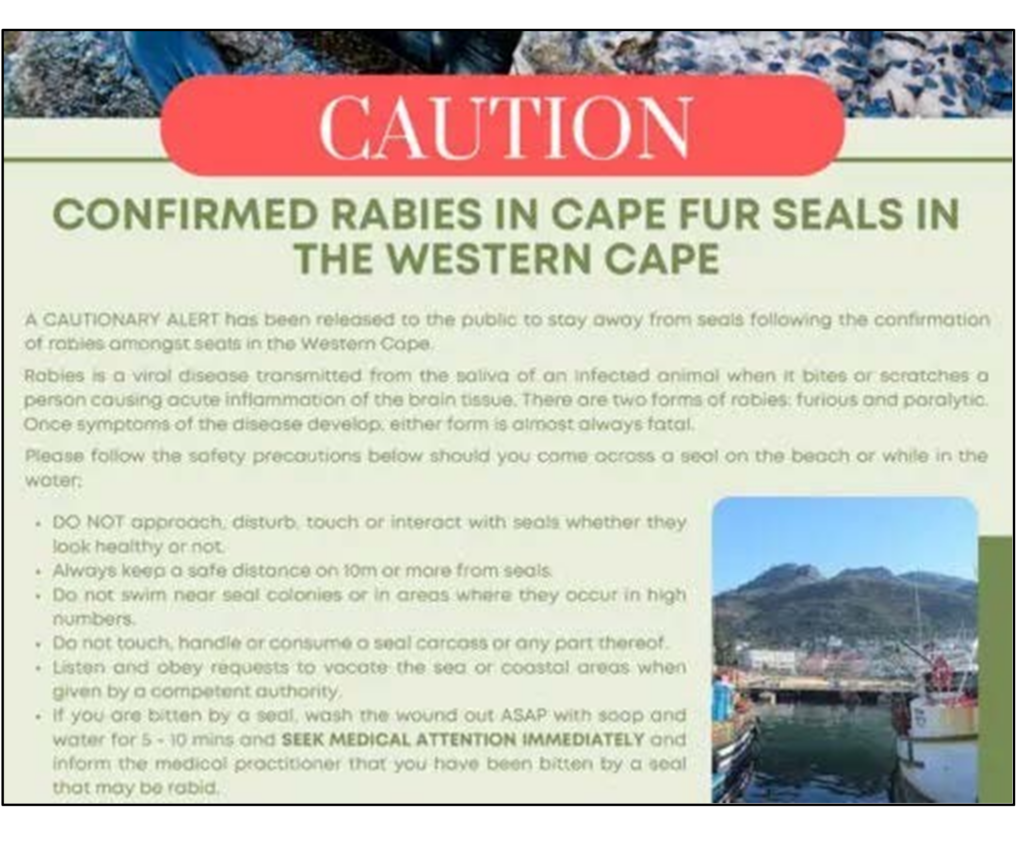
Rabies in Seals: What You Need To Know
Although still relatively rare, confirmed cases of rabies in Cape fur seals have brought renewed attention to the potential risks associated with close contact. Rabies is a fatal viral disease that can infect all mammals, including humans, and vigilance remains crucial.
Observed symptoms in affected seals may include:
- Abnormal aggression or unusual tameness
- Disorientation, poor coordination, or inability to move properly
- Excess salivation or strange vocalisations
- Remaining far from water for long periods
The public is urged to maintain a safe distance from seals at all times, particularly when they are resting on beaches or rocky shores. Children and dogs should be kept well away from haul-out sites, and any seal displaying concerning behaviour should be reported to the relevant authorities or local stranding networks.
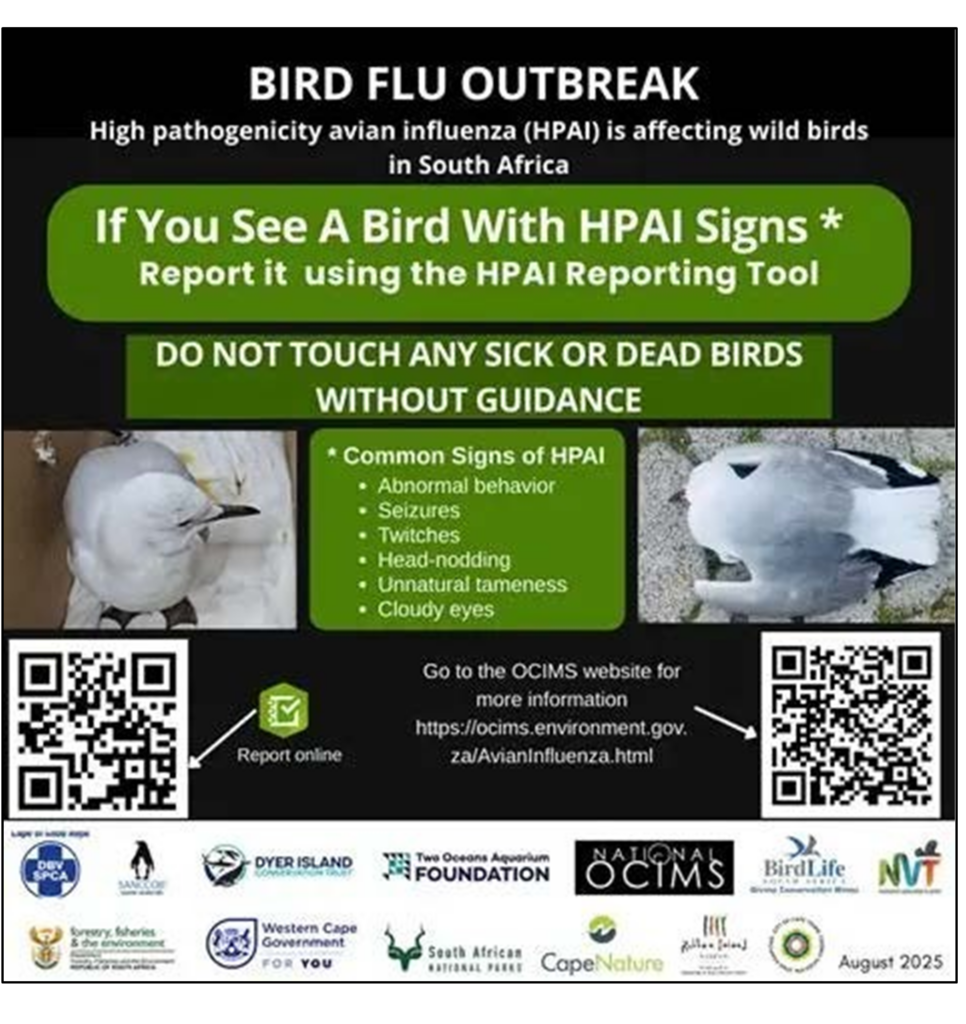
Avian Influenza in Coastal Birds:
Highly Pathogenic Avian Influenza (HPAI) continues to circulate within several seabird and shorebird populations. During this time of the year, higher bird densities and strong coastal winds can make affected individuals more visible to beachgoers.
Common signs of avian influenza include:
- Weakness or inability to fly
- Neurological symptoms such as head tilting or tremors
- Sudden or unusual mortalities in groups of birds.
Members of the public are reminded not to handle sick or deal with birds. Pets should be kept away from affected areas, and any suspected cases should be reported so that trained personnel can respond appropriately. These ongoing wildlife health concerns serve as an important reminder of the need for responsible behaviour around marine and coastal animals, especially during the high-traffic festive season. By remaining informed, keeping a respectful distance, and reporting sick or injured wildlife, we contribute to the safety of both the public and the natural environment.
Monthly Species Profile
Leopard Toad / Westelike Luiperdskurwepadda
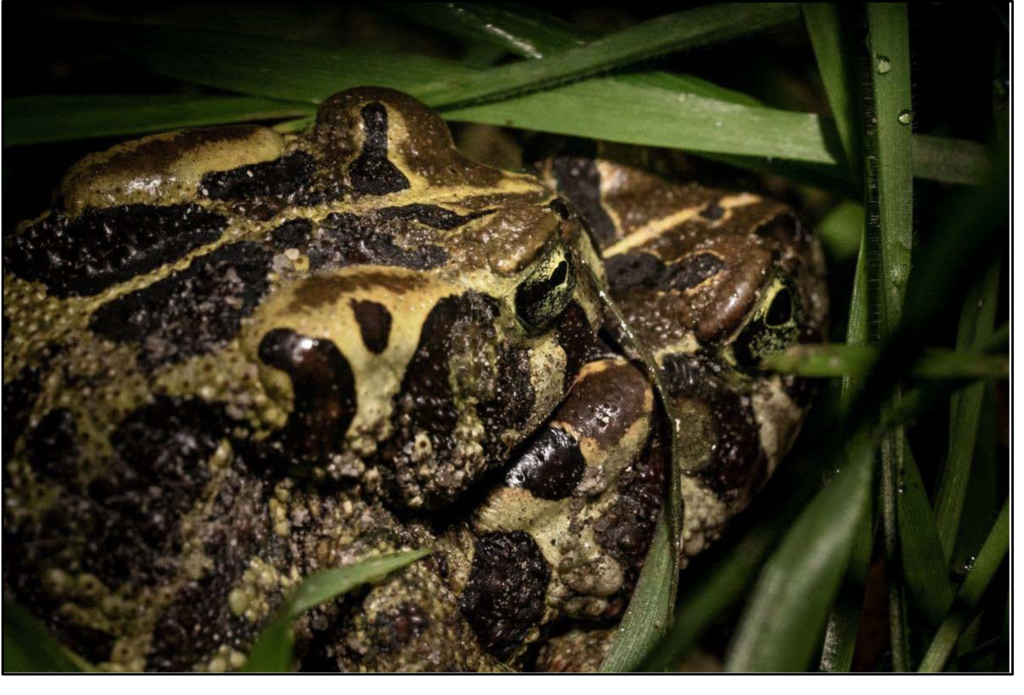
Scientific Name: Amietophrynus pantherinus
Family: Bufonidae
Description: This large, nocturnal toad can reach 90 to 140 mm in body length and has rough skin with large parotid glands behind each eye. The upper body is bright yellow with dark to reddish-brown spots and a yellow stripe down the middle of its back. The underside of the body is cream-coloured, darker in males than in females. This species has relatively large eyes with horizontally oval pupils. The males’ call, which can be heard during breeding seasons, is similar to a deep snoring sound being repeated every few seconds.
Distribution: These toads are endemic to the coastal regions of the south-western Cape from the Cape Peninsula to the Agulhas Plain.
Habitat: Although this species is typically found in coastal lowlands, it can also sometimes be seen in valleys, mountain slopes, and gardens. While they spend most of their time away from water, they do not venture too far from their breeding habitats, which include deep, slow-flowing rivers, lakes, vleis, and dams. These breeding sites require sufficient aquatic vegetation.
Diet: Their diet consists mainly of insects such as moths, ants and crickets, snails, spiders, and worms. Tadpoles will feed on microbial films and algae.
Life Cycle: Breeding season occurs from late July into October, when the adults migrate to a suitable breeding site. Males will call to attract nearby females, who will lay thousands of eggs in strings, which will attach to submerged or floating aquatic vegetation. The eggs will then hatch after a few days, and the tadpoles will develop over the course of several weeks before metamorphosing into toadlets. The toadlets will begin to leave the water from late October to December.
Importance: As predators of insects and other species of tadpoles, this species contributes to nutrient cycling and aids in regulating invertebrate populations. Their sensitivity to pollution, habitat disturbance, and changes in hydrology make them important indicators of wetland health. Conservation Status: This species has been listed as Endangered due to threats such as habitat loss, pollution, invasive predatory fish species, road mortality, and urban development.
References
AFRICAN BIRDLIFE. 2025. How You Can Help During South Africa’s Latest Avian Flu Outbreak.
[online] https://africanbirdlife.org.za/2025/11/25/avian-flu-how-you-can-help/ [Accessed November 2025]
CAPENATURE. N/D. Western Leopard Toad. [online] https://www.capenature.co.za/fauna-andflora/western-leopard-toad [Accessed November 2025]
CAPENATURE. 2025. Avian Influenza detected in Western Cape: Public urged to stay alert, not alarmed. [online] https://www.capenature.co.za/news/2025/avian-influenza-detected-in-westerncape-public-urged-to-stay-alert-not-alarmed [Accessed November 2025]
NATIONAL INSTITUTE FOR COMMUNICABLE DISEASE. 2025. Rabies and Seals in South Africa: What You Need to Know. [online] https://www.nicd.ac.za/rabies-and-seals-in-south-africa-what-youneed-to-know/ [Accessed November 2025]
WESTERN CAPE GOVERNMENT. 2024. Rabies in the Western Cape: Seals, Dogs, and Jackals.
[online] https://www.elsenburg.com/vetepi/epireport_pdf/May2024.pdf [Accessed November 2025] WESTERN LEOPARD TOAD CONSERVATION COMMITTEE. N/D. About the Western Leopard Toad. [online] https://www.westernleopardtoad.org/about-the-wlt/ [Accessed November 2025]
BERNARD VAN HEERDEN
HAYLEY THORPE
ETHAN ELBRECHT
FRANSMANSHOEK CONSERVANCY 082 084 2791 | fransmanshoek@gmail.com