
“Colors are the smiles of nature.”— Leigh Hunt

Compliance Management
Marine Living Recourses Act
During August, the Rangers came across a total of 27 fishermen; recreational fishing, spearfishing/diving, and bait collecting permits were inspected by Stefan, MC and Divan in accordance with the Marine Living Resources Act (Act 18 of 1998). Of the 27 permits checked, two (two) failed to produce a valid permit. We remind everyone that it is essential to be in possession of a permit, even if you are simply fishing for a day or two! We ask that if you witness any fishermen, divers, or bait collectors and suspect they are not following the rules and regulations, please get in touch with the Conservancy immediately.
Fransmanshoek Conservancy and The Department of Fisheries (DFFE) conducted a joint patrol during the month of August, stretching from Springerbaai Coastal Eco-Estate to Gouritzmond. During the operation no individuals were found, fishing or harvesting. We would like to thank DFFE for their contribution and we look forward to future joint patrols alongside them.
Natural Resource Management
Chainsaw and Herbicide Training
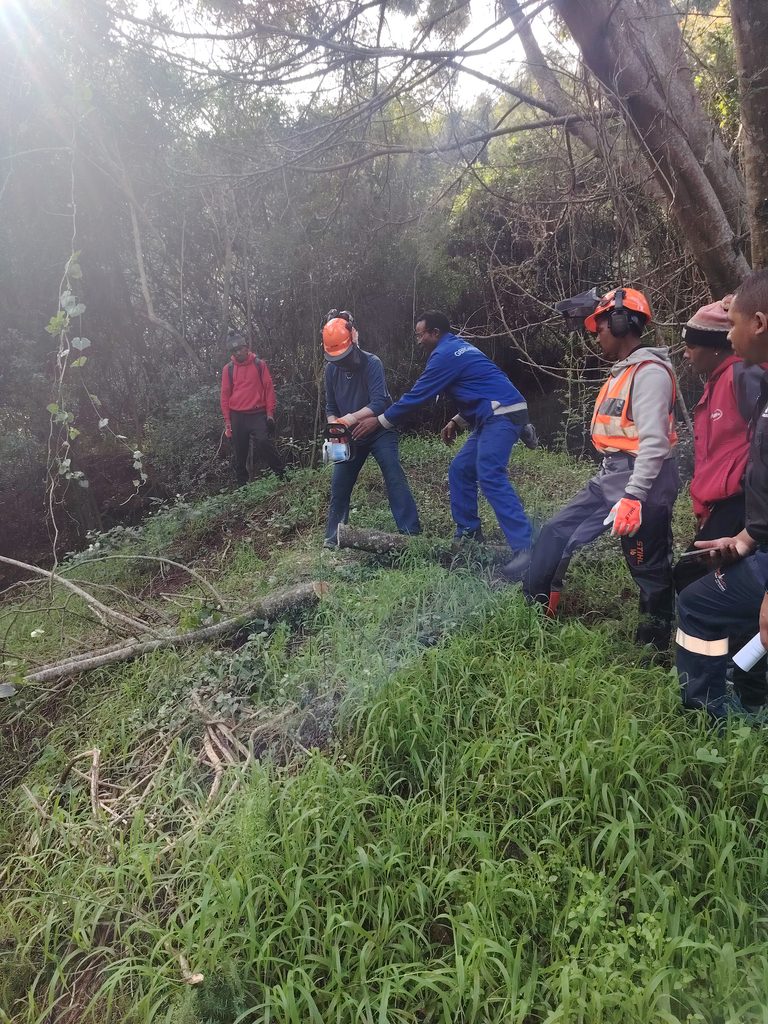
The Fransmanshoek rangers took part in chainsaw training to learn how to operate and handle a chainsaw safely and correctly. The training covered the basic parts of a chainsaw and how the engine powers the chain around the guide bar, as well as correct starting, handling and cutting techniques. The rangers were also taught about the importance of personal protective equipment (PPE), including safety helmets, eye and hearing protection, gloves, chainsaw-protective trousers and safety boots, which help reduce the risk of serious injuries. Safe working practices such as checking the chainsaw before use, maintaining a safe working area, keeping a firm grip and stable stance, being aware of kickback and never operating the machine without proper training were emphasised. Proper training and PPE are essential because chainsaws are powerful machines that can cause serious injuries if they are used incorrectly. Emphasis was placed on safe work practices such inspecting the chainsaw before using it, ensuring a secure workspace, maintaining a strong grip and solid stance, being mindful of kickback, and never using the machine without the necessary training. Because chainsaws are strong tools that can seriously injure people if handled improperly, proper training and personal protective equipment (PPE) are crucial. The rangers also took part in herbicide training to make sure they are protected as well as the people and animals in the area. The course addressed the various kinds of herbicides, their uses, how to choose the right product, and how to use it successfully. In order to lower the danger of exposure, the significance of personal protective equipment (PPE), such as gloves, protective clothes, eye protection, and appropriate footwear, was also discussed. In addition to the significance of adhering to product labels and preventing herbicide from harming people, animals, water supplies, and non-target plants, the rangers were instructed on proper handling, mixing, application, and storage techniques. Herbicides might be used safely and responsibly during conservation and invasive plant control operations thanks to the training.
Environmental Education
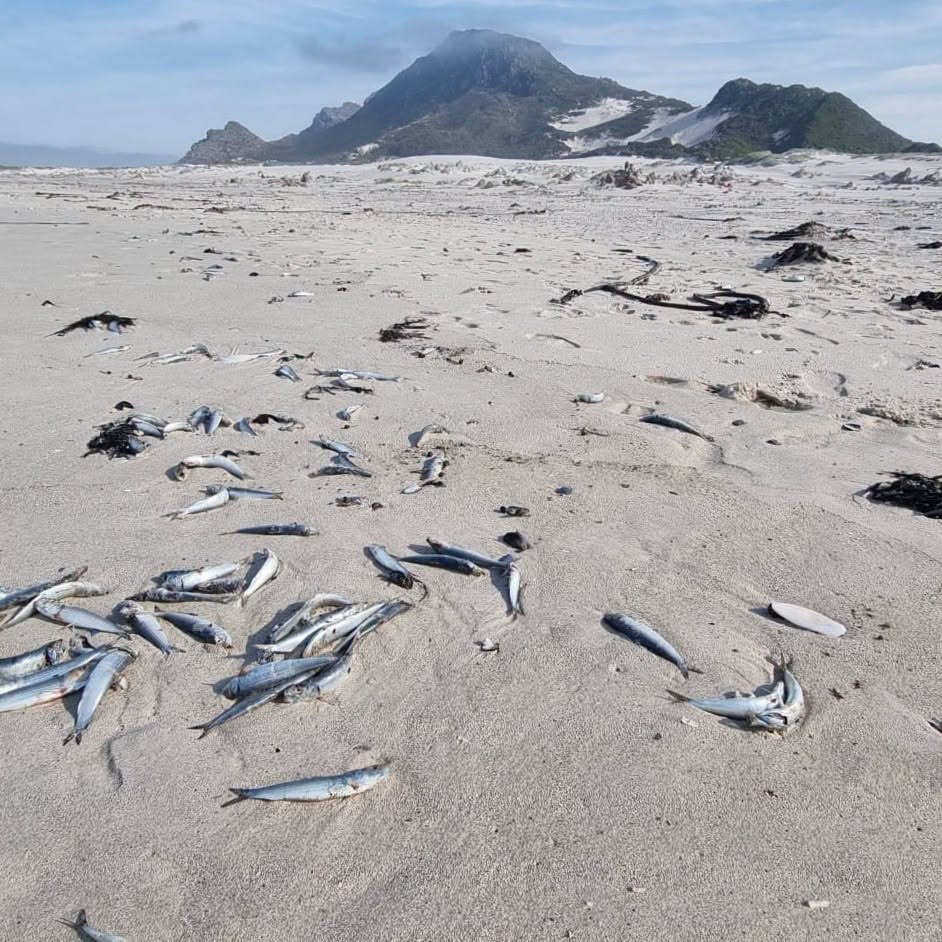
Pilchard Herpesvirus Detected in Sardines Along the South African Coastline
Large numbers of sardines have been washing up along sections of the South African coastline, from the West Coast through to the southern and eastern coastlines. The Department of Forestry, Fisheries and the Environment (DFFE) is continuing its investigation to determine the underlying cause of this unusual mortality event.
Following previous media statements issued by the DFFE, the Department has confirmed that laboratory sequencing detected genetic material from pilchard herpesvirus (PHV) in sampled sardines.
PHV has not previously been reported in South African sardines. The virus was associated with two significant sardine mortality events in Australasia during the 1990s. However, PHV was subsequently detected in apparently healthy Australian sardine populations without resulting in continued or widespread mortality.
How does the virus affect sardines?
PHV is associated with damage to the gills of sardines. The gills are essential for extracting oxygen from the surrounding water. When the gill tissue becomes inflamed or damaged, the fish’s ability to absorb oxygen can be severely impaired. In affected fish, this can ultimately lead to respiratory failure and death.
However, the detection of a virus does not necessarily mean that the virus alone is responsible for the current mortality event. Scientists are still investigating whether environmental conditions or other stressors may have contributed to triggering or worsening the outbreak.
Potential environmental stressors may include:
- Low dissolved oxygen levels in the water;
- Sudden changes in sea temperature;
- Harmful algal blooms;
- Changes in water quality; and
- Other environmental or biological stressors that may weaken fish and increase their susceptibility to disease.
Further investigation and monitoring are required to establish whether PHV is the primary cause of mortality, a contributing factor, or an opportunistic infection affecting already stressed fish.
What could this mean for the marine ecosystem?
A significant decline in sardine numbers could have consequences extending well beyond the sardine population itself. Sardines are an important component of the marine food web and provide a major food source for numerous predators, including seabirds, dolphins, seals and larger predatory fish.
A sustained reduction in sardine abundance could therefore have knock-on effects throughout the marine ecosystem.
There may also be implications for the commercial fishing industry. The DFFE is monitoring the situation and assessing whether management measures, including sardine fishing quotas, may need to be reviewed in response to changes in the sardine population.
Is PHV a risk to humans?
Importantly, PHV is associated with sardines, also known as pilchards, and there is currently no evidence that the virus infects humans or other animals.
The detection of PHV should therefore not be interpreted as meaning that people can contract herpes from eating sardines. This is a fish virus and should not be confused with human herpes viruses.
The detection of PHV also does not, by itself, mean that healthy commercially harvested sardines or properly processed canned sardine products are unsafe. At present, the available findings do not justify a general suspension of sardine fishing or canning activities.
The biotoxin testing conducted to date is considered reassuring, although these results should not be interpreted as a blanket clearance of every commercial catch. Continued monitoring, appropriate handling and compliance with established food-safety requirements remain essential.
What should the public do?
Members of the public are nevertheless urged to avoid collecting, handling or consuming dead or dying sardines found along the coastline.
Dead or dying fish should also not be fed to pets. Decomposing fish can harbour harmful microorganisms and bacteria, and fish that have been exposed to environmental contaminants or toxins may present additional risks.
Where large numbers of dead or dying sardines are observed, members of the public should report the occurrence to the relevant local authorities or environmental authorities rather than handling or removing the fish themselves.
The investigation continues
The detection of PHV provides an important piece of information, but it does not yet provide a complete explanation for the widespread sardine mortalities observed along the South African coastline.
Scientists and authorities are continuing to investigate the interaction between the virus, environmental conditions and other potential stressors. Until those investigations are complete, it is important to distinguish between the detection of PHV and confirmation that PHV is the sole cause of the mortality event.
Monthly Species Profile – Jackal Buzzard/Jakkelsvoël


Scientific name: Buteo rufofuscus
Family: Accipitridae
Description: Jackal Buzzards are one of the larger buzzard species native to Africa and are also one of the visually striking species especially when they have developed their adult plumage. Usually they will have a dark reddish brown breast separated from the throat by a white ragged band, and a black-and-white barred belly.
The underside of the tail is also typically the same reddish brown colour as the breast. The underside of the primary flight feathers are blackish while the secondary flight feathers are white with black tips that form a trailing edge.
Juvenile buzzards are typically much more brown and dull when compared to the adults. The tails of juveniles will also appear the same shade of brown however it may occasionally have a cream coloured tip. The reddish brown colour of the adult may also appear in small patches on the breast and wings. The tips of juvenile wings may also occasionally have black tips.
Colour morphs are found within this species such as lighter and darker morphs. In the light and dark morphs respectively, the breast patch is predominantly white or light rufous and predominantly black with little separation between the breast patch and throat.
The jackal buzzard has a very short tail, broad wings, bulky body and large bill compared to most other buzzards. Typically adults may measure 44 to 60cm in total length. When weighed, one survey found 55 unsexed birds to weigh from 790 to 1,370g while another found seven males to weigh from 865 to 1,080g and eleven females to weigh from 1,150 to 1,700g. Another female also weighed approximately 1,700g , making this one of the more larger buzzard species in the world.
Distribution: Jackal buzzards are endemic to Southern Africa, being found throughout these countries from Namibia in the west to Mozambique in the east. They are also found in Lesotho and Swaziland. They are found throughout South Africa but are generally absent from some of the north-central regions but are more common in the regions of the south-west, north-west and the north-east.
They are highly adaptable and inhabit areas that are arid with lower amounts of rainfall as well as more lush areas with large amounts of rainfall.
However, these birds seem to prefer more open environments where vegetation tends to grow lower, which can allow for the more preferred hunting methods such as grasslands. They also show a preference for montane environments but can also range low rocky outcrops and rubble at sea-level to high mountainous in Lesotho up to 3,500m. These rocky environments are often used for nesting sites.
In a study in the Cape Peninsula, jackal buzzards had a low nesting density of only 2.8 pairs/100km2 while other studies have shown higher densities of up to 22.2 pairs/100km2 such a study in the Lesotho highlands. In the Cape Peninsula, birds showed preference for low-lying and south-facing cliffs for nesting sites.
Many people may see these birds while driving along the roads where they are commonly seen perched on telephone poles and fence posts. They are also regularly seen soaring or gliding near roads.
Due to their wide distribution range and their adaptability they can be found year round in many protected areas such Table Mountain-, Karoo-, Augrabies- and Addo Elephant National Park. They are also frequently seen in the area of the Fransmanshoek Conservancy.
Diet: The main diet of Jackal Buzzards is typically smaller terrestrial mammals, especially rodents. Other prey items include reptiles, such as snakes and lizards, and other birds, especially ground feeding birds, as well as insects.
They are also opportunistic feeders with birds targeting extremely vulnerable prey, such as nestlings of other birds, and even taking part in scavenging. They have frequently been seen eating the carrion from carcasses, it is regularly seen scavenging from roadkill.
Studies may indicate that these birds may target smaller mammals during nesting cycles or breeding seasons and then switch to a more carrion based diet during the non breeding season, this behaviour may differ between and depend on locality and certain population groups.
The act of scavenging among these birds may also vary with cases of buzzards coming to scavenge being less frequent or completely absent when larger scavengers are present in the area such as Jackals, Hyenas and Vultures who are often aggressive towards other scavengers. It is for this reason that buzzards are more commonly seen when they inhabit areas with less competition such as near roads and agricultural areas. This is also further increased by these birds being generally less shy of women than other animals thus allowing them to visit areas such as roads or farmland more frequently.
When Jackal Buzzards do scavenge they tend to prefer larger carcasses such as those of sheep, goats, steenbok, duiker, hares and springhares.
Typically, these birds will conduct still-hunts where they drop on its prey from a perch, often either trees or roadside poles or posts. It takes prey almost exclusively on bare ground, such as next to or on roads. It may also hunt by soaring or periodically hovering or hanging on updrafts within a small area.
Life cycle: Jackal Buzzard breeding season will generally be from July to December but can start as early as May at last to as late as March.
They build large stick nests in trees or crags and very rarely on occasions even on telephone poles. These nests are oftentimes reused each season growing larger with each of these seasons. When these nests are first constructed they are on average around 60 – 70 cm across and 35cm deep. They can grow to be more than 1m across with repeated uses.
Two, rarely three, creamy, blueish eggs are laid at around three day intervals. These eggs are then incubated exclusively by the female who is then cared for by the male who brings her food.
A surveys of egg sizes show they average 60.7 mm × 47.7 mm with a range in height of 57 to 64.9 mm and in diameter of 45 to 50 mm
The eggs will hatch after around 40 days where the hatchlings are born. These hatchlings will continue to grow and will have their first attempts of flight at around 50 – 60 days of age. The parents are extremely protective throughout this time and will attack most intruders that get too close to the nest such as animals and even humans.
At 70 days of age the young birds become independent of the nest and become fledgling. At this stage the young birds will still be taken care of by their parents for several weeks and after leaving the nest and will learn to hunt and handle prey before fully maturing.
Conservation Status: Jackal Buzzards are classified as a least concern species and are relatively common. One of the reasons for their success is that they are very adaptable.
Some of the biggest threats to Jackal Buzzards are man made. The largest of these being large structures such as wind turbines and power lines. Another common threat are collisions where cars where the birds are likely hit while foraging alongside roads.
Some of the largest threats to Jackal Buzzards are collisions with wind turbines and vehicles.
Another significant threat to Jackal Buzzards is poisoning. In many cases, these birds are unintentionally poisoned after consuming carcasses that have been deliberately laced with poison and left out to target other animals, particularly Black-backed Jackals. As scavengers, Jackal Buzzards may feed on these poisoned carcasses, resulting in secondary poisoning. This can lead to severe illness or death and poses a serious threat to local Jackal Buzzard populations, particularly in areas where predator poisoning is practised.
This species has a wide distribution range and is highly adaptable. In many cases they inhabit protected areas throughout their range which they inhabit year round, meaning that pairs likely nest in these areas. Their presence in protected areas as well as their adaptability further helps them to survive and contributes to their own conservation .
References
Department of Forestry, Fisheries and the Environment. (2026)Sardine deaths ease as wide-ranging investigation continues. Available at: https://www.dffe.gov.za/mediarelease/sardineinvestigation (Accessed: 29 August 2026).
Sinclair, I. (2004). A Photographic Guide to Birds of Southern Africa. Struik.
Ferguson-Lees, J., & Christie, D. A. (2001). Raptors of the world. Houghton Mifflin Harcourt.
CRC Handbook of Avian Body Masses, 2nd Edition by John B. Dunning Jr. (Editor). CRC Press (2008)
Mendelsohn, J. M., Kemp, A. C., Biggs, H. C., Biggs, R., & Brown, C. J. (1989). Wing areas, wing loadings and wing spans of 66 species of African raptors.
Mendelsohn, J. M. (1997). Jackal Buzzard Buteo rufofuscus. The atlas of southern African birds
Malan, G. (2004). “Linear density and plumage variation of Jackal Buzzards (Falconiformes: Accipitridae) in northwestern South Africa”. Durban Museum Novitates. 29 (1): 126–128., 1, 212-213.
Bam, Sophia; Hart, Lorinda; Willows-Munro, Sandi (2019-12-13).
Steyn, P. (1983). Birds of prey of southern Africa: Their identification and life histories. Croom Helm, Beckenham (UK). 1983.
Barnard, P. (1987). Foraging site selection by three raptors in relation to grassland burning in a montane habitat. African Journal of Ecology, 25(1), 35-45.
Jenkins, A. R.; van Zyl, A. J. (2005). “Conservation status and community structure of cliff-nesting raptors and ravens on the Cape Peninsula, South Africa”. Ostrich. 76 (3–4): 175–184.
Hart, Lorinda A; Wreford, Erin P; Brown, Mark; Downs, Colleen T (2018-07-03). “Hunting flight speeds of five southern African raptors”. Ostrich. 89 (3): 251–258.
Brown, Leslie and Amadon, Dean (1986) Eagles, Hawks and Falcons of the World. The Wellfleet Press.
Schmitt, M. B., Baur, S., & von Maltttz, F. (1987). Observations on the Jackal Buzzard in the Karoo.
Visagie, R. (2009). Growth and development of a Jackal Buzzard Buteo rufofuscus chick in the eastern Nama Karoo. Gabar 20:20-25.Ostrich, 58(3), 97-102.
Dean, W. R. J., & Milton, S. J. (2003). The importance of roads and road verges for raptors and crows in the Succulent and Nama-Karoo, South Africa. Ostrich-Journal of African Ornithology, 74(3-4), 181-186.
Frost, P.G.H. (1967). Jackal Buzzard Buteo rufofuscus hovering. Ostrich, 38:204.
Stefan Otto
MC Prins
Divan Breet
FRANSMANSHOEK CONSERVANCY
Like and Follow us on: @fmhconservancy
082 084 2791 | fransmanshoek@gmail.com