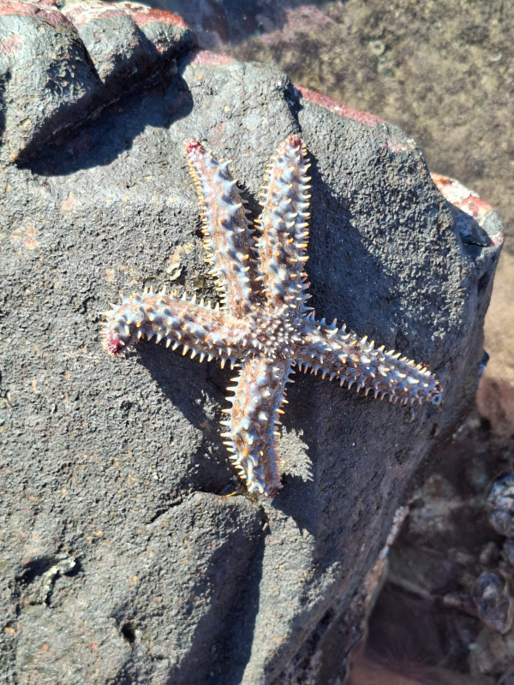
“Nature is not a place to visit, it is home.” – Gary Snyder

Compliance Management
Marine Living Resources Act
During July, the Rangers came across a total of 52 fishermen; recreational fishing, spearfishing/diving, and bait collecting permits were inspected by Stefan, MC and Divan in accordance with the Marine Living Resources Act (Act 18 of 1998). Of the 52 permits checked, 5 (five) failed to produce a valid permit. We remind everyone that it is essential to be in possession of a permit, even if you are simply fishing for a day or two! We ask that if you witness any fishermen, divers, or bait collectors and suspect they are not following the rules and regulations, please get in touch with the Conservancy immediately.
Fransmanshoek Conservancy and The Department of Fisheries (DFFE) conducted two joint patrols during the month of July, stretching from Springerbaai Coastal Eco-Estate to Gouritzmond. During the operation 28 permits were inspected and two (2) fines were issued to offenders with a combined value of R800. The offences included Fishing without a valid recreational permit and Collecting bait without the required permit. We would like to thank DFFE for their contribution and we look forward to future joint patrols alongside them.
Natural Resource Management
Addressing Lantana camara and preventing the spread
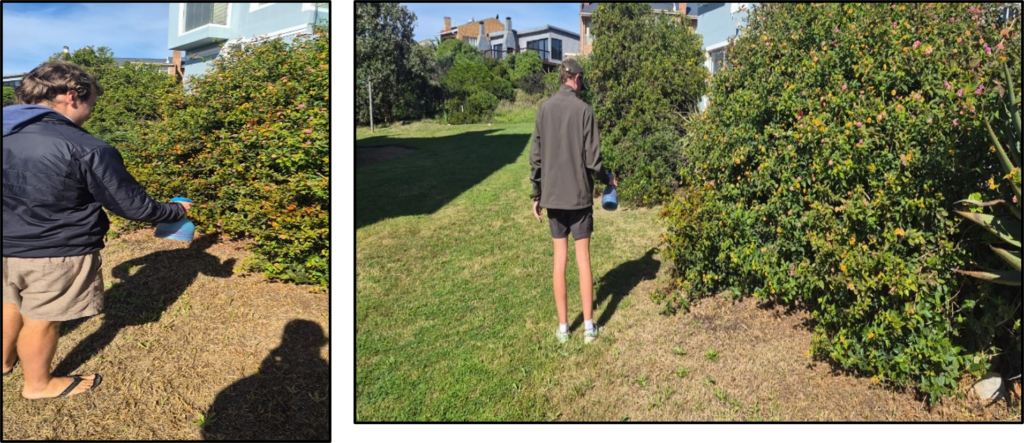
A number of Lantana camara plants in the Vleesbaai area were recently removed by the Fransmanshoek Conservancy rangers. To stop the plants from spreading further and to save the native vegetation in the area, they were sprayed with an approved herbicide.
One of the most invasive alien plant species in South Africa is the Lantana camara. It creates dense thickets that reduce biodiversity and deteriorate natural environments by outcompeting native plants for sunshine, water, and nutrients. It poses a major risk to agriculture and the environment because it can be poisonous to animals and cattle if ingested.
Because birds and other animals consume and disseminate the seeds, Lantana multiplies quickly. If plant waste is not properly disposed of, it can potentially spread from chopped stems. In order to stop new infestations from spreading, early detection and removal are crucial.
The plant is typically identified as a woody shrub with square, rough stems and dark green leaves that, when crushed, have a pungent scent. It yields clusters of tiny, vividly colored flowers that might be yellow, orange, pink, red, or a mix of these hues. When ripe, these blossoms become tiny green berries that become dark purple or black.
In order to remove any suspicious Lantana camara plants before they spread, members of the Fransmanshoek Conservancy are urged to report any such plants. Because lantana is an invasive species that endangers South Africa’s natural ecosystems, it should not be planted in gardens. Everyone can contribute to the preservation of our native biodiversity by reporting infestations and endorsing alien plant management initiatives.
Environmental Education
The importance of fires and Firefighting
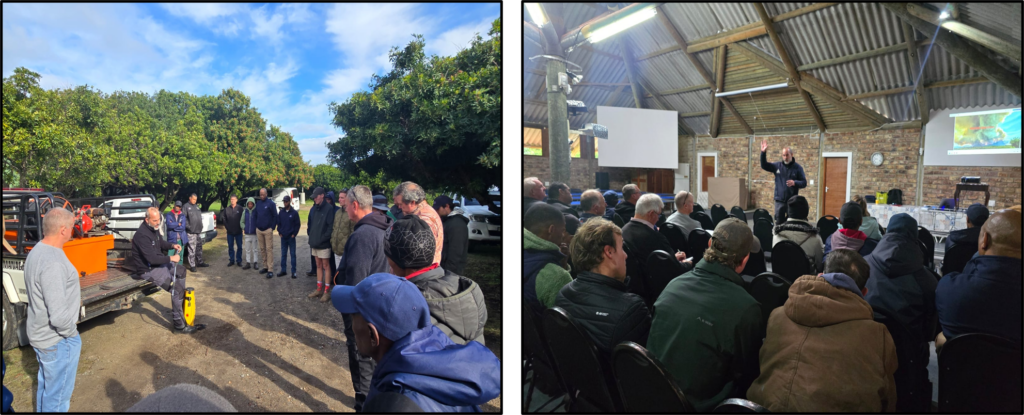
The Southern Cape Fire Prevention Association recently hosted firefighting training and the Fransmanshoek Conservancy rangers were present. Wildfire awareness, prevention, and the proper use of firefighting equipment were the main topics of the training. It gave rangers useful practical knowledge to make sure they are ready to act swiftly and efficiently in the event of a fire.
Many South African habitats naturally have wildfires, which are crucial for preserving healthy vegetation by promoting seed germination and eliminating dead plant matter. Uncontrolled fires, however, can damage infrastructure and property and injure animals and humans. The first step in preventing wildfires is responsible behavior. Campfires should never be left unattended, rubbish should not be burned in hot or windy weather, and cigarette butts should not be disposed of in open spaces to name a few. A minor fire can be kept from growing into a large problem by reporting smoke or flames as soon as it is discovered.
Essential firefighting tools, such as a bakkie sakkie, fire beater, and fire rake, were introduced to and practiced by the rangers during the training. Firefighters can swiftly spray water on flames with a bakkie sakkie, which is a water tank attached to a car with a pump and hose. While fire rakes assist in removing burning vegetation and building firebreaks to delay or stop the development of fire, fire beaters are used to put out grass fires by cutting off the oxygen supply.
The necessity of constantly inspecting and maintaining firefighting equipment was one of the training’s key lessons. Water tanks should be filled, pumps and hoses should be tested frequently, and hand instruments like rakes and fire beaters should be examined to make sure they are in good operating order. It is crucial to be ready before a fire breaks out since malfunctioning equipment during an emergency can waste time and put firefighters in danger.
It’s crucial to maintain composure, relocate to a secure area, and notify the Southern Cape Fire Prevention Association or the appropriate emergency services right away if a wildfire breaks out. Early reporting lowers the chance that the fire will spread and cause more damage by enabling skilled firefighting personnel to act swiftly. Fransmanshoek Conservancy is dedicated to enhancing fire readiness and assisting in the protection of the local population, wildlife, and environment through frequent training, appropriate equipment maintenance, and community awareness.
Voelvlei Bird Monitoring – CWAC
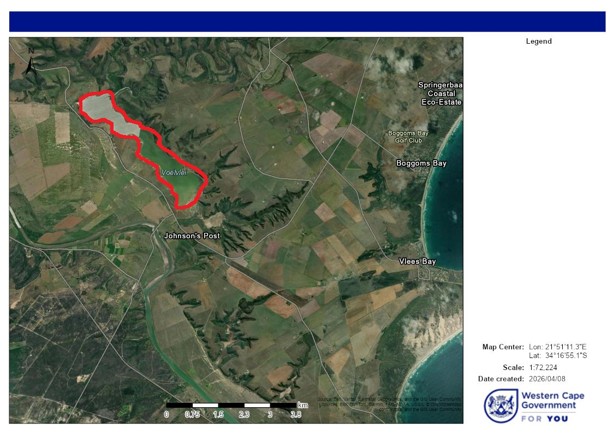
On 13 July, the Fransmanshoek Conservancy rangers joined Rudi Minnie, Conservation Officer for Mossel Bay Municipality, to conduct a waterbird count at Voëlvlei. The survey recorded an impressive 34 bird species, with a total of 468 individual birds observed. These regular counts provide valuable data that supports the monitoring and conservation of local wetland ecosystems.
What is CWAC?
The Coordinated Waterbird Counts (CWAC) is one of Southern Africa’s leading citizen science initiatives. Established in 1992 by the Animal Demography Unit (ADU) at the University of Cape Town and now managed by the FitzPatrick Institute of African Ornithology, CWAC plays a vital role in monitoring waterbird populations throughout the region. Through regular counts conducted by volunteers and conservationists, the programme tracks population sizes, long-term trends, seasonal movements, and the conservation status of waterbirds across hundreds of wetlands in Southern Africa. This information provides valuable insights that support wetland management, biodiversity conservation, and environmental decision-making.
How does it work?
Volunteer-driven monitoring:
Dedicated volunteers and conservation professionals visit more than 600 registered wetland sites across Southern Africa, including lagoons, estuaries, marshes, rivers, and dams. During these surveys, all waterbirds present are systematically identified and counted using standardized monitoring methods.
Regular survey schedule:
Counts are conducted at least twice annually, during mid-summer (January–February) and mid-winter (July–August). This timing enables the programme to monitor both resident waterbird populations and seasonal fluctuations associated with migratory species.
Conservation value:
The information collected through CWAC provides invaluable long-term data on waterbird populations and wetland ecosystem health. These data help guide conservation planning, support informed wetland management decisions, identify population trends, and contribute to international biodiversity databases such as the Global Biodiversity Information Facility (GBIF), enhancing our understanding of biodiversity at regional and global scales.
How to get Involved
Register as a Citizen Scientist
Visit the CWAC Website and create an account to receive your official Citizen Science (CS/ADU) number.
Find a Site
You can find registered waterbodies on the CWAC Website’s directory that is near you.
Start counting!
CWAC counts happens twice a year, during mid-summer (January/February) and mid-winter (July).
Follow the standardized CWAC Information Sheets to record the birds and local site conditions.
Submit your Data
Submit your completed census form on the CWAC Website
Monthly Species Profile – Black Harrier/Witkruisvalk

Scientific name: Circus maurus
Family: Accipitridae
Description: The Black Harrier is a medium sized bird that is black in colour with white markings, mainly on the wings and the tail, and they also have striking yellow eyes and legs. Similar to other harriers they can generally be described as having a slim body with a long tail and narrow wings. They may appear completely black when perched but can usually be a rather eye-catching bird, especially when in flight where many of its most recognizable features can be observed, such as the white markings which consist of their white flight feathers, white rump and their recognizable black and white striped tail. They generally have a wingspan of roughly around 1 m or between 105 cm to 115 cm and their body length around 44 cm to 50 cm. They can weigh around 400 g to 600 g.
Juveniles generally differ from the adults in that they have brown- and sand-coloured underparts while the edges of their feathers may be tan in colour. They also have black streaks on their breasts and flanks. Some sexual dimorphism can also be observed in these birds with females being around 15 – 20 % heavier than the males while the males can have greyer primaries and are even a darker shade of black than the females and have been described as being coal – black in colour.
Distribution: Black Harriers are only found in Southern Africa where it is mostly found in the Southwestern parts of the region such as the Western and Northern Cape and Namibia. They are known for inhabiting biomes such as the Fynbos, Succulent Karoo and the Nama Karoo. They are also known for frequently inhabiting coastal and in or near marshy areas such as those in Botswana and the coastal river floodplains of Namibia.
These birds are migratory which allows them to be seen in such a wide variety of locations with individual birds being known to cover great distances. These migrations usually take place in the summer months from their breeding areas in south-western South Africa, such as the Western and Northern Cape, towards the east, such as the Eastern Cape and southwestern Kwazulu – Natal, or to the North, into Namibia or other parts of the Northern Cape. As a result of these migrations they have also been seen in the grasslands found more to the north of South Africa such as those in the Freestate and Lesotho even as far north as south – west as Mpumalanga.
They are also seen in agricultural lands such as crop fields and livestock areas especially in those found in the Cape regions.Some of the protected areas where these birds can be found and made use of for breeding include the Bontebok National Park, West Coast National Park, De Hoop Nature Reserve, Haarwegskloof Renosterveld Reserve and even in the Fransmanshoek Conservancy.
Diet: Black Harriers are almost exclusively carnivores with a preference for vertebrates smaller than themselves. They are known for being small mammal specialists with them mainly targeting rodent species such as the four – striped mouse (Rhabdomys pumilio) which makes up a large part of its diet. Additionally, they will also feed on smaller birds and reptiles
Variation in diet may occur between different regions and even at certain times of the year. This can be seen in the differences in the diet of coastal and more inland populations with the diet of inland populations having a higher proportion of birds and less mammals. The seasons may also affect the diets of the different populations as they affect the populations of prey in the area the harriers find themselves. In months such as September, for example, the variation in the diet of many of the populations may be relatively similar while later in the year, such as during December or January, a greater variation in the diets can sometimes be seen between the different populations. In this scenario the diet of inland populations starts to include larger amounts of birds, lizards and other prey animals instead of mammals, particularly small mammals, when compared to more coastal populations. This may be a result of the hotter temperatures which make the small mammals less active in the day which also reduces the risk of them being caught by harriers. Additionally, in the winter rainfall areas, the number of small mammals in the diet of the harriers can increase due to the rainy season as during the winter rainy season creates more favorable conditions for many of the rodent species, such as the four striped mouse, who reproduce during this time thus allowing more to become available to the harriers.
It is suggested that the annual migrations are driven by food scarcity with some birds sometimes not undertaking these migrations likely as a result of abundance of food and other factors that may affect them such as that summer is a time of less abundance in their breeding areas and that they also undertake migrations individually rather than in pairs. Unusually, black harriers travel almost twice as fast during their summer post-breeding migration as during their winter to spring pre-breeding migration. In many other species, this is often reported the other way round. One reason for this is that it’s part of their pre-breeding behaviour and that the extra time is used to find the best breeding areas.
Life cycle: Black Harriers are primarily monogamous and will form a pair with another bird with which they will build a nest and raise chicks with.When it comes to making nests, what makes Black Harriers unique is that they build these nests on the ground. These nests are usually built among taller vegetation such as grass, stems, brushes, reeds and weeds. Some of the most commonly used vegetation types that are used for nesting sites are coastal dune thickets and mountainous fynbos.
These nests can sometimes be built within the same general area by different pairs and are sometimes referred to as “colonies” or “clusters” which are generally made up of around 3 to 15 different pairs. The distance between these nests can vary with some of the closest being 50 m apart, however, they are generally 200 to 400 m apart.
The female will usually lay around 3 to 5 eggs. The egg laying period for these birds is usually from June to November with peaks in July and September. The female will incubate her eggs for around 35 days before they hatch. It is during this brooding period as well as during parts of the nest building phase that the male will hunt and bring food to the female which. The transfer of the food from the male to the female can sometimes be a spectacle in itself with the pair conducting a mid-air transfer where the female will take the food from the talons of the male mid-flight.
Once the chicks hatch, they will eventually grow to become fledgelings at around 5 to 6 weeks of age. It is during this time as fledgelings that the chicks will learn to fly while also still being under the care of their parents. The parents will look after their chicks and bring them food for them for at least another 2 to 3 weeks or potentially longer. After this period the chicks will finally mature and become fully independent.
Conservation Status: The Black Harrier is unfortunately classified as an endangered species with around 1300 to 2000 mature individuals left in the wild. Some of the main causes for their decline are the loss of habitat through agriculture, urbanization and invasive alien species. This also correlates with the loss of many of the different types of fynbos, which are also threatened by these activities, which the Black Harriers have used as their preferred habitat for nesting and hunting. It is believed that the Black Harrier has lost about 50% of its preferred habitat over the last century due to habitat transformation through agriculture. This further correlates with the loss of the Renosterveld fynbos, which is lowland type of fynbos that is generally classified as being adapted to more nutrient rich soils, which has drastically been reduced primarily through agriculture particularly for the growing of cereals such as wheat and barley. While the harriers still do make use of these fields for both nesting and hunting it is generally not the preferred conditions for them to be successful, especially for those trying to nest in agricultural fields as the harvest season often falls in the middle of the Black Harrier breeding season.
In recent times the encroachment of alien vegetation on pristine areas has shown to alter the habitat in such a way that makes it less favourable for the Harriers while urbanization can completely destroy or remove the habitat the birds rely on or alter it in a way that also makes it less suitable for them. Recently, it has been shown that wind turbines also pose a major threat to the Black Harrier populations who may fall victim to the blades of the turbines.
Thankfully, however, mitigation and conservation efforts are underway in order to help conserve the wild Black Harrier populations. Blade marking on wind turbines has shown to reduce moralities with some tests still underway in order to achieve the most optimal results. Other efforts include general habitat conservation through the establishment of protected areas and cooperating with land owners and farmers in order to conserve habitats found on their property. Populations and their movement are also monitored through GPS tagging in order to determine home ranges, migration routes, foraging hotspots and nesting sites. This helps to determine areas that are of importance to the species and nest sites are especially important as human disruption is often not allowed and they are even taken into consideration in development proposals, such as for wind farms.
Black Harriers still rely heavily on the pristine areas found within protected areas which are oftentimes seen as key areas for breeding, and they are often an indicator of a healthy ecosystem with a high diversity as they may show that there is a high diversity in rodents and birds. Often, the harriers will play key ecological roles in these areas such as the regulation of rodent populations. Thus, the presence of a Black Harrier on your property might mean that it is rich in biodiversity. The Fransmanshoek Conservancy is very thankful to be able to host at least one breeding pair of Black Harriers on the property and hopefully contribute to the conservancy of the beautiful birds.
References
Jenkins J., Simmons R. E., Curtis O., Atyeo, M., Raimondo, D., Jenkins, A. R. 2012. The value of the Black Harrier (Circus maurus) as a predictor of biodiversity in the plant-rich Cape Floral Kingdom, South Africa. Bird Conservation International 1 – 12. DOI:http://dx.doi.org/10.1017/S0959270911000323
Fuchs J., Simmons R. E., Mindell D. P., Bowie R. C. K., Oatley G. 2013. Lack of mtDNA genetic diversity in the Black Harrier Circus maurus, a southern African endemic. Ibis 156: 227–230
Brown L. H., Urban E. K., Newman K. 1982. The Birds of Africa. vol I. Academic Press, London.
Barnes K. N. 2000. The Eskom Red Data Book of Birds of South Africa, Lesotho and Swaziland. BirdLife South Africa, Johannesburg.
Harrison J. A., Allan D. G., Underhill L. G., Herremans M., Tree A. J., Parker V., Brown C. J. 1997. The Atlas of Southern African Birds. BirdLife South Africa, Johannesburg.
BirdLife International. (2021). “Circus maurus”. IUCN Red List of Threatened Species. 2021 e.T22695379A173521089. doi:10.2305/IUCN.UK.2021-3.RLTS.T22695379A173521089.en
Kemp, A.C.; Kirwan, G.M.; Christie, D.A. (2013). del Hoyo, J.; Elliott, A.; Sargatal, J.; Christie, D.A.; de Juana, E. (eds.). “Black Harrier (Circus maurus)”. Handbook of the Birds of the World Alive. Barcelona, Spain: Lynx Edicions. Retrieved 7 December 2015.
Curtis, Odette; Simmons, Robert E.; Jenkins, Andrew R. (December 2004). “Black Harrier Circus maurus of the Fynbos biome, South Africa: a threatened specialist or an adaptable survivor?”. Bird Conservation International. 14 (4): 233–245.
Garcia-Heras, Marie-Sophie; Arroyo, Beatriz; Mougeot, François; Bildstein, Keith; Therrien, Jean-François; Simmons, Robert E. (2019-01-17). Margalida, Antoni (ed.). “Migratory patterns and settlement areas revealed by remote sensing in an endangered intra-African migrant, the Black Harrier (Circus maurus)”
Garcia-Heras, M.-S.; Mougeot, F.; Simmons, R. E.; Arroyo, B. (2017). “Regional and temporal variation in diet and provisioning rates suggest weather limits prey availability for an endangered raptor”. Ibis. 159 (1): 567–579.
García-Heras, Marie-Sophie; Arroyo, Beatriz; Simmons, Robert E.; Camarero, Pablo R.; Mateo, Rafael; García, Jesús T.; Mougeot, Francois (December 2017). “Pollutants and diet influence carotenoid levels and integument coloration in nestlings of an endangered raptor”. Science of the Total Environment. 603–604: 299–307.
Stefan Otto
MC Prins
Divan Breet
FRANSMANSHOEK CONSERVANCY
082 084 2791 | fransmanshoek@gmail.com
Like and Follow us on: @fmhconservancy