
“The environment is where we all meet; where we all have a mutual interest; it is the one thing all of us share.” – Lady Bird Johnson.

Compliance Management
Marine Living Resources Act
During October, the Rangers came across a total of 13 fishermen. Recreational fishing, spearfishing/diving, and bait collecting permits were inspected by Bernard, Eben, Hayley, Thomas, and Ethan in accordance with the Marine Living Resources Act (Act 18 of 1998). Of the 13 permits checked, none failed to produce a valid permit.
We remind everyone that it is essential to be in possession of a permit, even if you are simply fishing for a day or two! We ask that if you witness any fishermen, divers, or bait collectors and suspect they are not following the rules and regulations, please get in touch with the Conservancy immediately.
Natural Resource Management
Gourikwa School Group
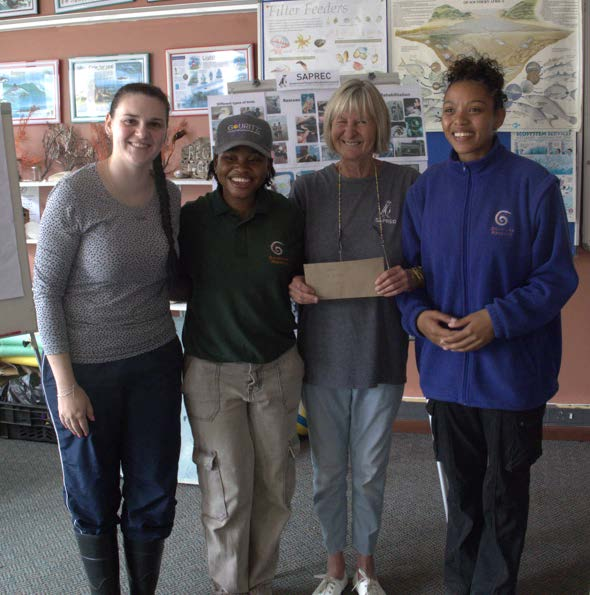
From 13 to 15 October, our three Rangers — Ethan, Thomas, and Eben — had the privilege of supporting Gourikwa Nature Reserve during a three-day environmental program for the Grade 11 learners from Curro School. The visit was designed to introduce the learners to practical conservation work and nurture a deep appreciation for the natural environment through real, hands-on experiences. Our role throughout the program was to assist the Gourikwa team with activities, offer environmental guidance where needed, and engage with the learners as they explored the reserve.
The program unfolded in a seamless blend of outdoor adventures, educational presentations, and interactive learning moments. One of the highlights was the hike along the Oumansbaard trail, a route that winds through fynbos and showcases the unique habitats that define Gourikwa. Along the way, the learners collected plant identification cards and took in the breathtaking views stretching across the reserve. This simple activity sparked many questions and conversations, as the learners began connecting what they saw with broader ecological concepts.
Each day also included insightful presentations delivered by the Gourikwa team and partnering environmental organisations, including SAPREC (Seabird and Penguin Rehabilitation Centre) and SMART (Stranded Marine Animal Rescue Team). These sessions covered marine rescue, wildlife protection, and conservation challenges and success stories in the region. The learners were encouraged to engage, and they did so with enthusiasm — asking thoughtful questions, sharing opinions, and showing a genuine curiosity for the world around them.

Another meaningful activity was the beach cleanup along Gourikwa’s coastline. Working together, the learners collected plastic waste and other debris, experiencing firsthand how pollution affects marine ecosystems. During the cleanup, we discussed issues such as microplastics, ocean currents, and the impact of litter on coastal wildlife — a practical, eye-opening exercise that reinforced the idea that environmental stewardship begins with small, everyday actions.
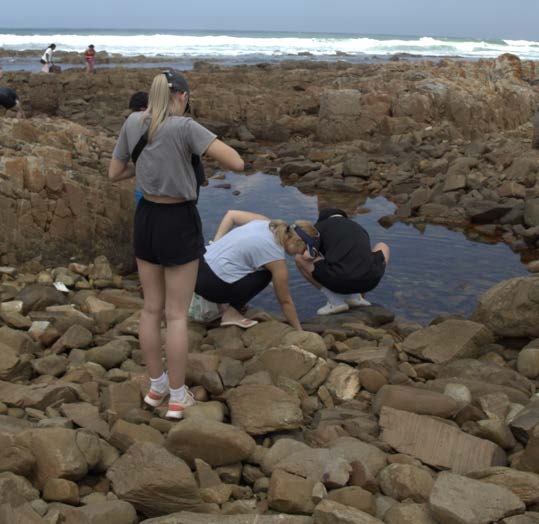
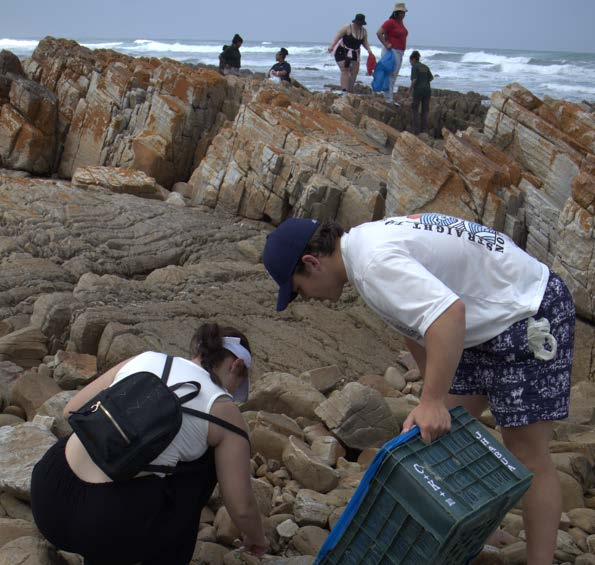
Between the structured activities, the students also took part in team-building games that encouraged collaboration and trust. These lighter moments offered the perfect opportunity to talk about conservation as a career, the realities of fieldwork, and the reasons so many of us feel called to protect natural spaces. Many learners expressed interest in outdoor work and asked about future pathways into conservation.
Overall, the three-day visit was far more than just an educational outing — it was a meaningful platform to inspire young people, strengthen partnerships among local environmental organisations, and showcase the importance of protecting our natural heritage. By working alongside the Gourikwa team, we helped create an enriching, memorable experience for the learners while also sharing our passion for the outdoors and conservation work. The experience was both rewarding and impactful, and it contributes to the ongoing effort to involve youth in environmental initiatives and cultivate the next generation of conservation stewards.
Restoring Balance through Biocontrol – Tackling Rooikrans Along Our Coast
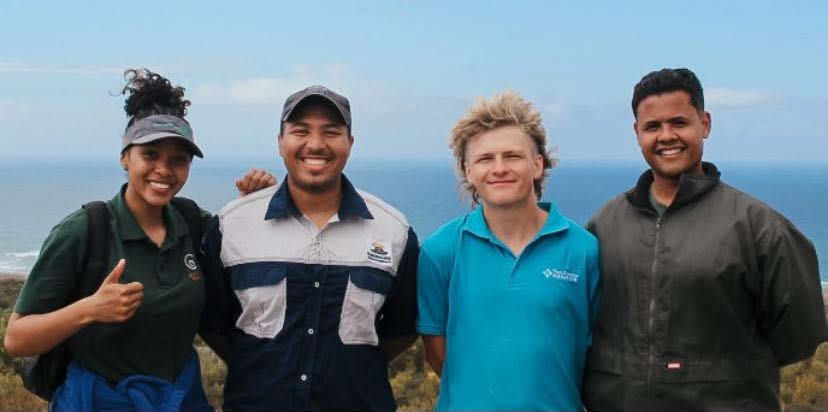
On Monday, 20 October, the Rangers were joined by Jolandie from the Gouritz Cluster Biosphere Reserve (GCBR) to carry out a biocontrol release targeting Acacia cyclops (Rooikrans). This invasive alien species, originally from Australia, has become a major ecological threat along the Western Cape coast.
Rooikrans was first introduced to South Africa to stabilise coastal dunes and reduce wind erosion. However, over time it spread rapidly beyond control, invading large areas of fynbos and dune vegetation. The species grows quickly, forming dense thickets that outcompete indigenous plants for light, space, and nutrients. These infestations also use far more water than native vegetation, contributing to groundwater depletion — a serious issue in the drought-prone Western Cape.
Beyond biodiversity loss, such invasions disrupt critical ecosystem services like water regulation, pollination, and soil stability. To address this, the GCBR has introduced a biological control agent, the Melanterius servulus (seed-eating weevil), which specifically targets Rooikrans seeds, reducing their ability to spread. Before any biocontrol agent is active in the region, Dasineura dielsii (Rooikrans flower-galling midge) has proven highly effective in suppressing seed production.
It is important to note that biocontrol is not a quick fix, but rather a long-term, sustainable solution. Its goal is not total eradication, but to reduce the invasive species’ competitive edge, allowing native vegetation to recover naturally. When combined with mechanical removal and follow-up clearing, this creates an Integrated Alien Plant Management approach — one of the most effective strategies for long-term ecosystem restoration.
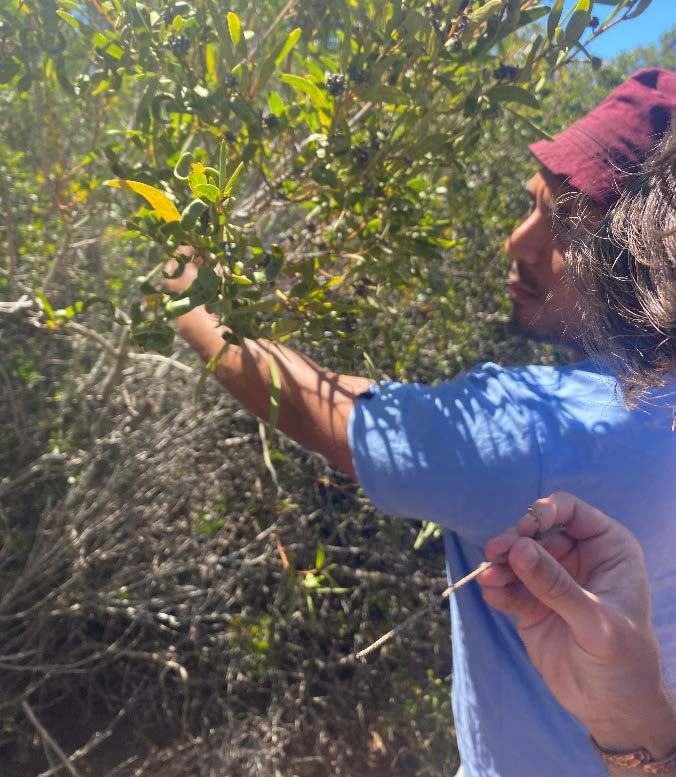
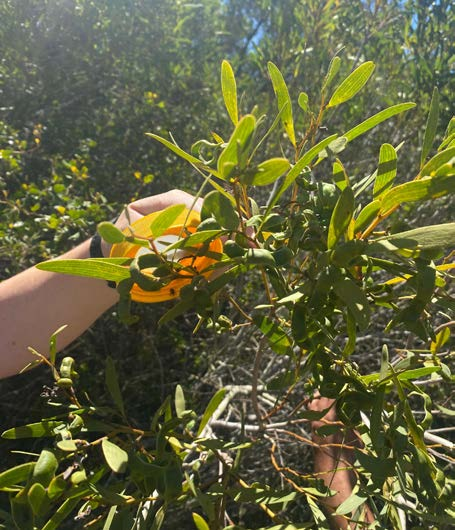
Through partnerships between conservancies and conservation organisations, these initiatives play a vital role in restoring ecosystem health and biodiversity. Over time, as Rooikrans populations decline, fynbos species and native wildlife — from pollinating insects to small mammals and birds — can return to flourish. Every small step, like the release of a single weevil, contributes to a larger vision: reclaiming our natural landscapes, restoring ecological balance, and ensuring a resilient, thriving environment for generations to come.
Read more about Rooikrans biocontrol at gouritz.com
Human-Wildlife Conflict
Nearing the end of October, Fransmanshoek Conservancy Rangers, along with two associates from CapeNature, were contacted by a group of concerned individuals from Vleesbaai regarding recent encounters with Rock Hyraxes/Klipdassie (Procavia capensis). These small mammals can be found widely across the southern Cape in coastal towns like Mossel Bay, and although peaceful and non-aggressive most of the time, they can potentially exhibit unusual behaviour in some scenarios.
The residents who had experienced such unpleasant encounters noted territoriality — especially during holiday seasons when foot traffic increases in the areas inhabited by the wildlife — with a particular concern for the safety of holidaymakers’ children and pets. Along with this, there was a concern for hygiene, as the nesting sites of these animals can produce unpleasant smells, as well as damage, and a tendency to forage on ornamental garden plants and crops.
Following similar issues in the past, some of the mitigation measures that had already been implemented included drain covers next to roads and ultrasonic deterrent technology. The difference made by these solutions was, however, not proving to be as successful as desired, leading to ongoing conflict. The suggestion was therefore made to experiment further with possible solutions and deterrents, aiming to make the area unappealing to the animals and preventing them from exploiting residential spaces. The suggested solutions included chilli-infused liquids, which repel animals due to their strong scent, as well as fences and mesh to restrict access to spaces that wildlife may find appealing.
Environmental Education
The Hidden Worlds Between the Tides
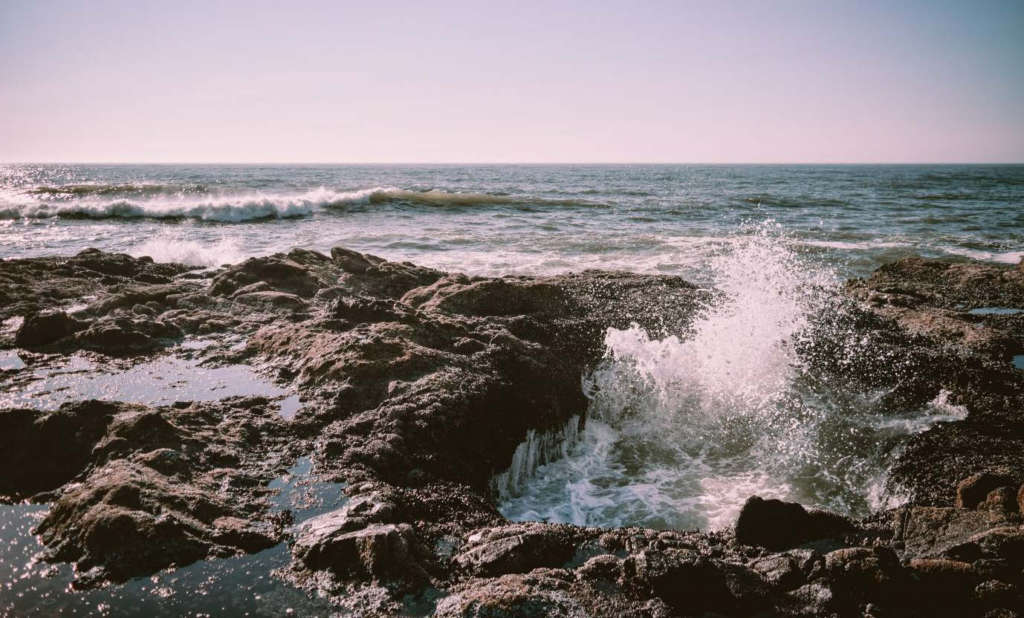
When the ocean breathes out and the tide slips away, it leaves behind a trail of glittering pockets along the rocky shoreline — small windows into another world. These rock pools, scattered across the intertidal zone of places like Fransmanshoek Conservancy, are alive with activity, though at first glance they might appear still and empty. Beneath the shimmering surface, however, an entire community of marine life is hard at work, each creature perfectly adapted to life between the tides.
Here, survival is no small feat. Imagine living in a place that’s underwater for half the day, and then left exposed to the blazing sun and gusting wind the next. The residents of these pools — from sea anemones and limpets to crabs and tiny fish — must endure dramatic changes in temperature, oxygen levels, and salinity with every passing tide. Yet, despite these challenges, they thrive.
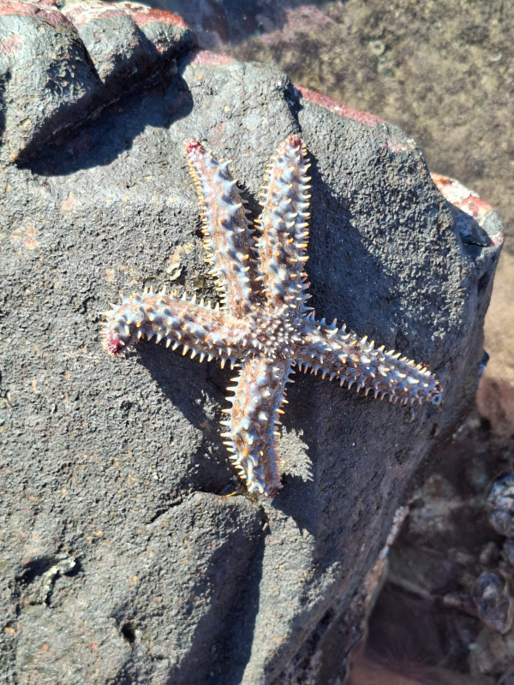
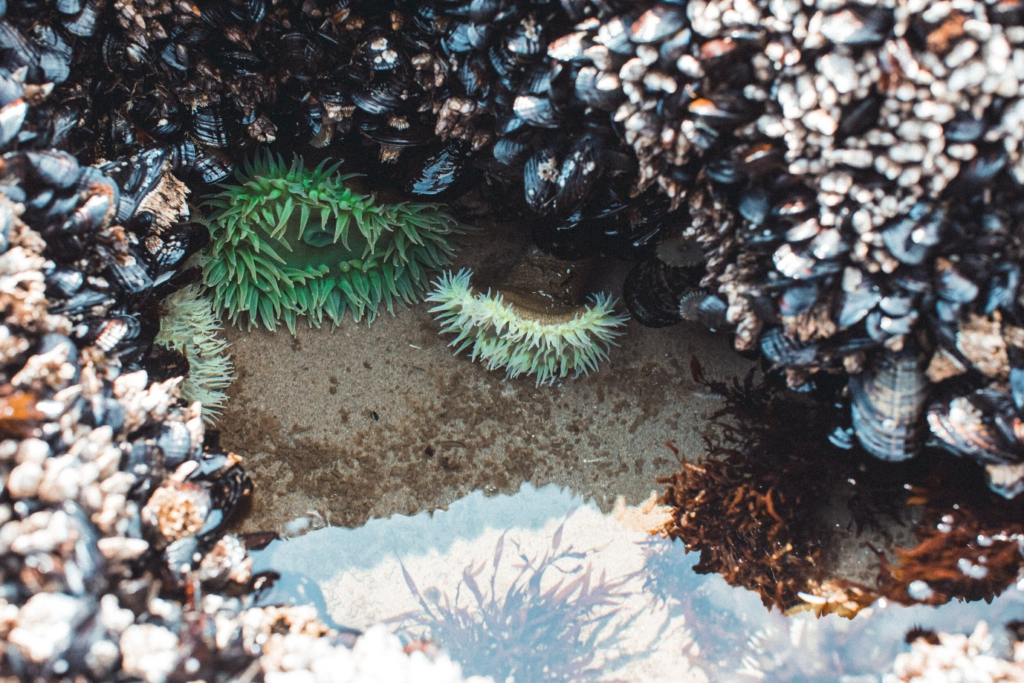
Take the sea anemone, for instance. When the tide recedes, it curls its delicate tentacles inward, transforming into a soft, sealed ball to lock in precious moisture until the waves return. Limpets, with their conical shells, use a powerful muscular foot to cling tightly to the rock, creating an airtight seal that prevents them from drying out. Small fish and sea stars shelter in the deeper pools, resting until the ocean floods back in.
Each tide pool is like a tiny ocean in itself — a living, breathing ecosystem that mirrors the greater marine world. Bright green sea lettuce and red algae sway gently with the movement of the water, providing food and hiding spaces for creatures below. Barnacles, periwinkles, and mussels line the edges, filtering plankton and nutrients from the water, while crabs scuttle about scavenging leftovers. Together, these organisms form a perfectly balanced web of life, where every species plays a role in keeping the ecosystem healthy.
But these small, enchanting habitats are more than just beautiful — they’re also indicators of the health of our coastline. The presence and diversity of rock pool species can tell us a lot about the quality of our marine environment, from water purity to climate impacts. Protecting them ensures that we maintain the delicate balance of our coastal ecosystems, which in turn supports larger marine life beyond the intertidal zone.
So, next time you explore Fransmanshoek or any stretch of rocky shoreline, pause for a moment beside a rock pool. Look closely — the longer you watch, the more life reveals itself. You might spot a crab carefully emerging from its hiding spot, a sea star stretching an arm, or a shrimp darting between shadows. These are the quiet worlds that remind us of nature’s resilience — that even in the smallest, harshest places, life finds a way to flourish.
Did You Know?
- A limpet always returns to the same spot on the rock after feeding — scientists call this its “home scar”.
- Sea anemones are carnivorous! They use their stinging tentacles to paralyse small prey such as plankton and shrimp.
- The intertidal zone is one of the most challenging habitats on Earth, yet it supports thousands of species adapted to its constant change.
- Rock pools act as nurseries for many marine creatures, offering shelter to young fish and invertebrates before they venture into the open ocean.
Monthly Species Profile: Narrow Leaf Cotton Bush / Gansie
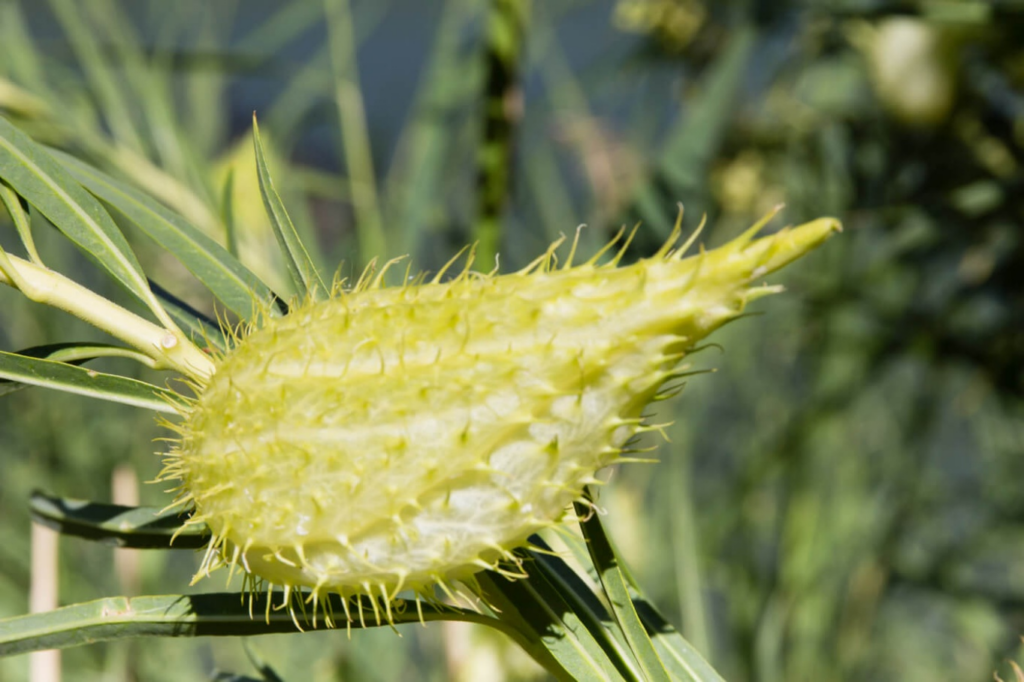
Scientific name: Gomphocarpus fruticosus
Family: Apocynaceae
Description: The Narrow-leaf Cotton Bush is an upright, perennial shrub that typically grows between 1–2 m tall. It is easily recognised by its long, narrow, lance-shaped leaves and its milky latex sap. From late spring through summer, it produces clusters of small, white to cream star-shaped flowers. These flowers later develop into distinctive, inflated seed pods covered in soft spines. When mature, the pods split to release seeds attached to silky white hairs, allowing them to disperse long distances by wind.
Distribution: Native to southern Africa but has become naturalised — and often invasive — in Australia, New Zealand, parts of Europe, and South America. In South Africa, it occurs widely across provinces, particularly in disturbed landscapes, old fields, roadsides, coastal dunes, and agricultural fringes. It is frequently encountered in the Western Cape and along the Garden Route.
Habitat: This species thrives in open, sunny areas with well-drained soils. It readily colonises disturbed sites, firebreaks, grazing lands, and coastal dune systems. Its extensive root system and wind-dispersed seeds allow it to establish rapidly in areas where natural vegetation has been cleared or degraded. Cotton Bush often competes aggressively with indigenous fynbos and coastal strandveld vegetation.
Ecological Impact: This species is considered a significant environmental weed, as it can substantially reduce the productivity of pastures and disrupt local ecosystems. It is particularly problematic in agricultural areas, where its dense infestations can hinder the growth of native flora. Additionally, it serves as a host for the monarch butterfly, which relies on it for food during its larval stage.
Usage: Historically, the fluffy fibres attached to its seeds were used as stuffing material and for rudimentary insulation. Some traditional medicinal applications exist in African communities, but these uses require caution due to the plant’s toxic latex. The plant as a whole is poisonous to livestock. Leaves are used as snuff and as a sedative in the treatment of headache and tuberculosis; roots are used to relieve stomach pain and general body aches. Today, it holds limited practical use and is more commonly managed as a weed than utilised.
Conservation Status: The Narrow-leaf Cotton Bush is not considered threatened in its native range. In fact, it is often regarded as an invasive or problem species where it spreads unchecked. According to SANBI (South African National Biodiversity Institute) botanical assessment, it is listed as Least Concern (LC).
Report compiled by: Bernard van Heerden, Eben de Wet, Hayley Thorpe, Thomas Willems & Ethan Elbrecht
Fransmanshoek Conservancy
082 084 2791 | fransmanshoek@gmail.com
Follow us on Facebook: @fmhconservancy