

“The environment is where we all meet; where all have a mutual interest; it is the one thing all of us share.” – Lady Bird Johnson
Compliance Management
Marine Living Resources Act
During July, the Rangers came across a total of 8 fishermen; recreational fishing, spearfishing/diving, and bait collecting permits were inspected by Bernard, Eben, Hayley, Thomas, and Ethan in accordance with the Marine Living Resources Act (Act 18 of 1998). Of the 8 permits checked, none failed to produce a valid permit. We remind everyone that it is essential to be in possession of a permit, even if you are simply fishing for a day or two! We ask that if you witness any fishermen, divers, or bait collectors and suspect they are not following the rules and regulations, please get in touch with the Conservancy immediately.
Natural Resource Management
Walking in the Footsteps of Our Forefathers: A Journey Through Nature and Tradition
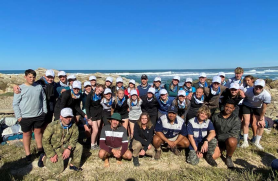
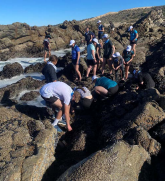
Over the course of several days, our dedicated team of Rangers had the enriching opportunity to engage with three distinct groups of Voortrekkers as part of our ongoing environmental education and outreach initiatives. These interactions provided valuable platforms to foster a deeper appreciation for nature, heritage, and sustainable living among the youth. On June 30th, our Rangers welcomed the first group of Voortrekkers, consisting of eager and curious young individuals exploring traditional survival and subsistence methods inspired by our forefathers. The educational focus for the day centered on sustainable resource use, highlighting how indigenous knowledge systems once guided communities in harvesting food and medicinal materials from their natural surroundings. We got to give the group the rich history of Fransmanshoek. Our Rangers conducted a hands-on session covering both terrestrial and marine resources. They introduce participants to a variety of edible and medicinal plant species found in the surrounding veld, demonstrating how these could be safely identified and harvested. In addition, a practical session on mussel harvesting on the rocky shore was held. Rangers demonstrated the ethical and responsible collection of mussels, followed by proper cleaning techniques. This culminated in the group preparing and consuming the mussels as part of their evening meal, an activity that combined cultural heritage with ecological mindfulness.
On July 2nd, our team travelled to the Kanon area to meet a second group of Voortrekkers. This session focused on deepening participants’ understanding of local flora, particularly plants with traditional food and medicinal value. A special emphasis was placed on the Rooikrans/Red-eyed Wattle (Acacia cyclops), an invasive species increasingly threatening indigenous biodiversity. The group discussed the ecological consequences of introducing non
indigenous plants and the importance of invasive species control in conservation management. The Rangers also facilitated an interactive Q&A session, where participants inquired about career paths in conservation, qualifications needed, and daily responsibilities involved in environmental work. This proved highly engaging and inspired several of the youth to consider future involvement in ecological fields.
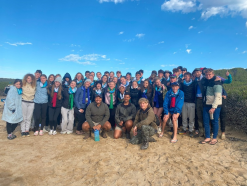
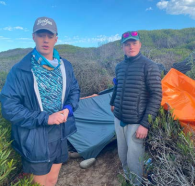
Later that same day, our Rangers met with the third and largest group of Voortrekkers. The group was taken on a guided hike through the Conservancy, where the Rangers shared information on the region’s diverse landscapes, indigenous vegetation, and rich cultural history. Along the route, key natural features and historical touchpoints were highlighted to provide participants with a holistic understanding of the area’s significance. This experience encouraged appreciation for both the natural environment and the importance of protected areas. The group responded enthusiastically, with many expressing a sense of wonder and accomplishment upon completing the hike. The evening concluded at our campground, where the participants spent the night surrounded by nature—an experience that fostered connection, reflection, and camaraderie.
Throughout these three events, our Rangers were energized by the enthusiasm and curiosity of the Voortrekker participants. These interactions are central to our mission of fostering environmental stewardship in younger generations. The team welcomed the opportunity to share their expertise and personal passions, reinforcing the vital role of environmental education in shaping future custodians of the natural world. Our heartfelt thanks go out to the Voortrekker groups for their active participation and open-minded engagement. We look forward to meeting them next year at the same time and same place.
A Living Classroom: Skills and Stewardship in the Nursery
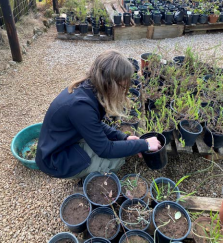
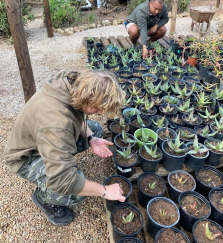
Fransmanshoek Conservancy Rangers continue to enjoy a strong and productive working partnership with the team at Springerbaai Coastal Eco-Estate, who is a member of the Conservancy. This partnership provides valuable opportunities for shared learning, hands-on environmental work, and the exchange of skills that directly benefit both our teams and the bigger ecosystems we serve. During July, our collaboration was particularly focused on the ongoing care and maintenance of Springerbaai’s Indigenous Nursery, a project that plays a vital role in the propagation and preservation of indigenous plant species along our coastline. Throughout three visits, on the 15th, 22nd, and 29th of July, our Rangers contributed to a variety of essential maintenance and improvement tasks, each designed to support the nursery’s long-term growth and productivity.
15 July – Propagation, Weeding, and Soil Preparation
Our Rangers began the month’s work by engaging in several key horticultural activities. This included propagating plant cuttings, carefully weeding the nursery beds, and re-potting young saplings that had outgrown their original greenhouse containers. A particular highlight was the opportunity to learn about preparing nutrient-rich potting soil blends. This skill ensures that each plant has the healthiest possible growing environment, which is crucial for the successful establishment of indigenous flora.
22 July – Structural Rearrangements and Organization
During the second visit, our team assisted in reorganizing and rearranging the nursery’s plant stands to optimize the space. This process required teamwork, attention to plant needs, and an understanding of how environmental factors influence healthy growth. The Rangers also assisted with the reorganization of plants to ensure all the same plants are placed together.
29 July – Weeding, Labelling, and Signage Creation
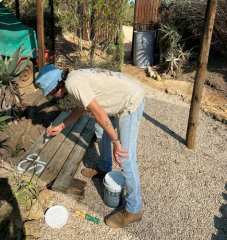
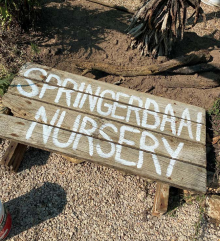
Our final July visit involved an intensive weeding session to remove unwanted growth from the plant sections. Once cleared, the team systematically labelled each plant, ensuring proper identification for future care and educational purposes. In a creative touch, the Rangers also repurposed old wood to design a new sign for the nursery, adding a personal, sustainable, and functional element to the space.
These practical experiences have provided our Rangers with valuable horticultural knowledge, strengthened our working relationship with Springerbaai, one of our contributing members, and sparked a shared vision: to develop our very own indigenous plant nursery at Fransmanshoek Conservancy. The skills gained, from plant propagation to sustainable signage creation, will form the foundation for this exciting future project, furthering our mission to conserve, restore, and celebrate the unique biodiversity of our coastal landscapes.
Two New Additional Student Ranger Accommodation Units
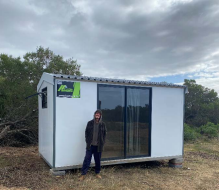
Fransmanhoek Conservancy is proud to announce the addition of two brand new housing units dedicated to accommodating our Student Rangers, a development that represents a significant step forward in our mission to educate, inspire, and empower the next generation of environmental stewards. For young people pursuing a career in conservation, the opportunity to live and work on-site offers an unmatched learning experience. These new units will provide our Student Rangers with secure, comfortable, and functional living spaces, enabling them to immerse themselves fully in the day-to-day operations of the Conservancy. Beyond the practical benefits, this investment supports their personal growth and deepens their connection to the environment they work so hard to protect.
The positive impact of this project extends beyond individual Student Rangers. By creating better living conditions, we strengthen our capacity to host and mentor more Student Rangers in the years ahead. These students will return to their communities equipped with practical skills, valuable field knowledge, and a passion for conservation that can inspire change far beyond our boundaries.
We extend our sincere gratitude to the Garden Route Casino Community Trust for their generous contribution and ongoing commitment to our work. Their belief in the connection between conservation and community development plays a vital role in making initiatives like this possible. We would also like to acknowledge Kazin Trading for their fast, reliable, and high-quality work in completing this project. Their professionalism and attention to detail ensured a smooth process from start to finish, delivering facilities that meet both our functional needs and long-term sustainability goals.
With these new units now ready, our Student Rangers are excited to settle into spaces designed to support their journey, places where they can live, learn, and lead. This achievement stands as a testament to the power of collaboration, proving that when community partners come together, lasting positive change for people and the planet is possible.
Proactive Conservation Through Plant Rescue During Site Development in Boggomsbaai
One of the most pressing challenges in conservation today is mitigating the impact of human activities on natural ecosystems. Urban expansion, infrastructure development, and landscape alteration are integral to modern society, yet they pose significant threats to biodiversity and ecological balance. While halting development altogether is neither realistic nor always desirable, what is possible and necessary is to integrate conservation principles into development processes from the outset. A crucial aspect of this integration involves conducting pre-construction environmental assessments to identify sensitive ecological features, such as indigenous vegetation, natural drainage systems, and faunal habitats, that may be affected. By doing so, measures can be put in place to reduce environmental degradation and promote the sustainable use of land.
On the 23rd of July, the Fransmanshoek Rangers were called upon to assist at a residential development site in Boggomsbaai. With a focus on conservation-conscious development, the team conducted a site visit before the commencement of heavy construction. The objective was to identify, remove, and safeguard indigenous plant species that were growing within the footprint of the proposed building site, plants that would otherwise be lost during excavation and earthworks. Several species were discovered during the assessment, including a variety of indigenous bulbs and herbaceous plants, many of which play vital roles in supporting local pollinators and maintaining soil health. These plants were meticulously excavated by hand to preserve their root systems and ensure the highest chance of survival. Once removed, they were transferred into grow bags filled with nutrient-rich substrate to help them recover from the stress of relocation.
These grow bags now serve as temporary homes where the plants are being monitored and maintained until they are ready to be reintroduced into suitable areas within the conservancy or nearby rehabilitated spaces. This method not only safeguards individual species but also helps maintain ecological integrity by allowing rescued plants to continue their life cycles in more secure environments. Through such interventions, Fransmanshoek Conservancy continues to promote responsible land-use practices that value biodiversity and environmental stewardship alongside development. By working collaboratively with landowners and developers, we aim to build a future where conservation is not a barrier to progress, but a foundation for it.
Environmental Education
Avian Influenza Outbreak in the Western Cape: Risks, Responses, and Conservation Concerns
In early July 2025, the Western Cape recorded a new outbreak of highly pathogenic avian influenza (HPAI), specifically the H5N1 clade 2.3.4.4b strain. This is the first detection of the disease in wild seabirds in the province since April 2024 and has sparked concerns across the conservation, agricultural, and tourism sectors. While the outbreak’s initial impact appears less severe than some in the past, history has shown how quickly it can escalate into a crisis for both wildlife and domestic poultry. Early reports indicate that Hartlaub’s gull has been the most affected species, with additional confirmed cases in Great White Pelicans, Grey-headed Gulls, Kelp Gulls, White-breasted Cormorants, Crowned Cormorants, and Sacred Ibises. The disease has also reached domestic poultry, with a recent case in farmed ducks near Paarl requiring humane culling to prevent further spread.
Of particular concern is the threat this outbreak poses to the Western Cape’s endangered seabirds, especially the African penguin, Cape cormorant, and Cape gannet. Past outbreaks provide a sobering warning: in 2021, over 24,000 Cape cormorants and more than 1,000 African penguins perished due to avian flu. In 2018, the H5N8 strain affected over 7,500 individual birds across 20 species. For species already under severe population pressure from habitat loss, overfishing, and climate change, such losses could tip them towards functional extinction.
Conservation organizations, led by the Southern African Foundation for the Conservation of Coastal Birds (SANCCOB), have mobilized quickly to mitigate the impact. Their efforts include implementing strict biosecurity protocols in seabird rehabilitation centers, monitoring colonies for early signs of infection, and coordinating with state veterinary services to ensure rapid response. Public awareness campaigns are also underway to encourage safe reporting of sick or dead birds, with clear guidance not to handle such animals directly.
The Western Cape Department of Agriculture has issued strong biosecurity recommendations for poultry farmers. These include restricting access to poultry enclosures, preventing contact enclosures, preventing contact between wild and domestic birds, disinfecting all equipment and vehicles entering farms, and monitoring flocks closely for symptoms. The department stresses that while the risk to humans is extremely low, personal safety measures should always be followed. The primary concerns remain threefold. First, a mass mortality event among endangered seabirds could have irreversible ecological and economic consequences, especially for the region’s nature-based tourism sector. Second, spillover into poultry threatens both food security and livelihoods. Third, the province’s preparedness capacity needs to match the speed and severity with which avian flu can spread, including developing vaccination strategies, maintaining rapid-response teams, and enhancing long-term surveillance systems.
Looking ahead, a united and informed response is essential. By strengthening surveillance, enforcing biosecurity, protecting rehabilitation centers, and educating the public on safe interaction with wildlife, we can limit the damage caused by this outbreak. The situation is a reminder that conservation work is not only about habitat protection, but also about managing complex, fast-moving disease threats that can decimate already vulnerable species. The Western Cape’s seabirds are integral to our natural heritage, ecosystems, and identity. Protecting them from avian influenza is a task that will require vigilance, collaboration, and swift action from conservationists, farmers, authorities, and the public alike.
Monthly Species Profile
Common Sand Hermit Crab / Kluisenares
Scientific name: Diogenes brevirostiris
Family: Diogenidae
Description: The common sand hermit crab is roughly 30mm, with a dirty white body with dark brown markings. Their left pincer is noticeably larger and more robust looking than the right. This species can be distinguished from similar species of the Diogenes genus by its lack of red marking and unique head shape.
Distribution: This species is endemic to South Africa. Found along South Africa’s coastlines from the west coast in the Western Cape to the south coast in Kwa-Zulu Natal.
Habitat: Commonly found in sheltered sandbanks and in sandy pools where it is buried during low tide, only emerging when submerged to forage for food.
Diet: They are bottom feeders and, as such, scavenge for both plant and meat-based foods.
Life Cycle: This species can live to be upwards of 10 years, during which they undergo several life cycle stages. Starting as larvae and eventually developing into juvenile hermit crabs. Once they reach adulthood, they will engage in complex mating rituals during the warmer months, after which the females will lay thousands of eggs in a safe spot where they will be completely submerged and able to develop further.
Importance: As detrivores, hermit crabs help to break down dead plant and animal material and recycle the nutrients so that it can be put back into the ecosystem. The common sand hermit crab also uses the shells of more than 20 species of sea snails.
References
ANIMAL KINGDOM. N.d. Hermit Crab. [online] https://animalkingdom.org/species/hermit-crab/ [Accessed July 2025]
BRANCH, G.M., GRIFFITHS, C.L., BRANCH, M.L., & BECKLEY, L.E. 2010. Two Oceans: A guide to the marine life of southern Africa. Struik Nature. [Accessed July 2025]
CAPENATURE. 2025. Avian Influenza detected in Western Cape: Public urged to stay alert, not alarmed. [online] https://www.capenature.co.za/news/2025/avian-influenza-detected-in-western cape-public-urged-to-stay-alert-not-alarmed [Accessed August 2025]
CAPE TIMES. 2025. Bird flu outbreak in Western Cape: What you need to know to protect poultry and wildlife. [online] https://capetimes.co.za/news/2025-08-06-bird-flu-outbreak-in-western-cape what-you-need-to-know-to-protect-poultry-and-wildlife/ [Accessed August 2025]
NCC GROUP. n/d. Search and Rescue of Plants that Face Habitat Destruction. [online] https://ncc group.co.za/search-and-rescue-relocating-plants-that-face-habitat-destruction/ [Accessed July 2025]
NDAMANE, N. 2020. Salt Marsh Field Trip Guide. [online] https://knysnabasinproject.co.za/wp content/uploads/2020/05/Salt-Marsh-Fieldtrip-Guide.pdf [Accessed July 2025]
THE SOUTH AFRICAN. 2025. New bird flu outbreak confirmed in this province. [online] https://www.thesouthafrican.com/news/new-bird-flu-outbreak-confirmed-in-this province/#:~:text=The%20Western%20Cape%20Department%20of%20Agriculture%20%28WCDoA% 29%20has,in%20farmed%20ducks%20near%20Paarl%20in%20early%20July. [Accessed July 2025]
WESTERN CAPE GOVERNMENT. 2025. Avian Influenza detected in Western Cape: Public urged to stay alert, not alarmed. [online] https://www.westerncape.gov.za/agriculture/article/avian influenza-detected-western-cape-public-urged-stay-alert-not-alarmed [Accessed August 2025]
BERNARD VAN HEERDEN
EBEN DE WET
HAYLEY THORPE
THOMAS WILLEMS
ETHAN ELBRECHT
FRANSMANSHOEK CONSERVANCY
082 084 2791 | fransmanshoek@gmail.com
Like and Follow us on:
@fransmanshoek
@fmhconservancy