“If you truly love nature, you will find beauty everywhere” Van Gogh
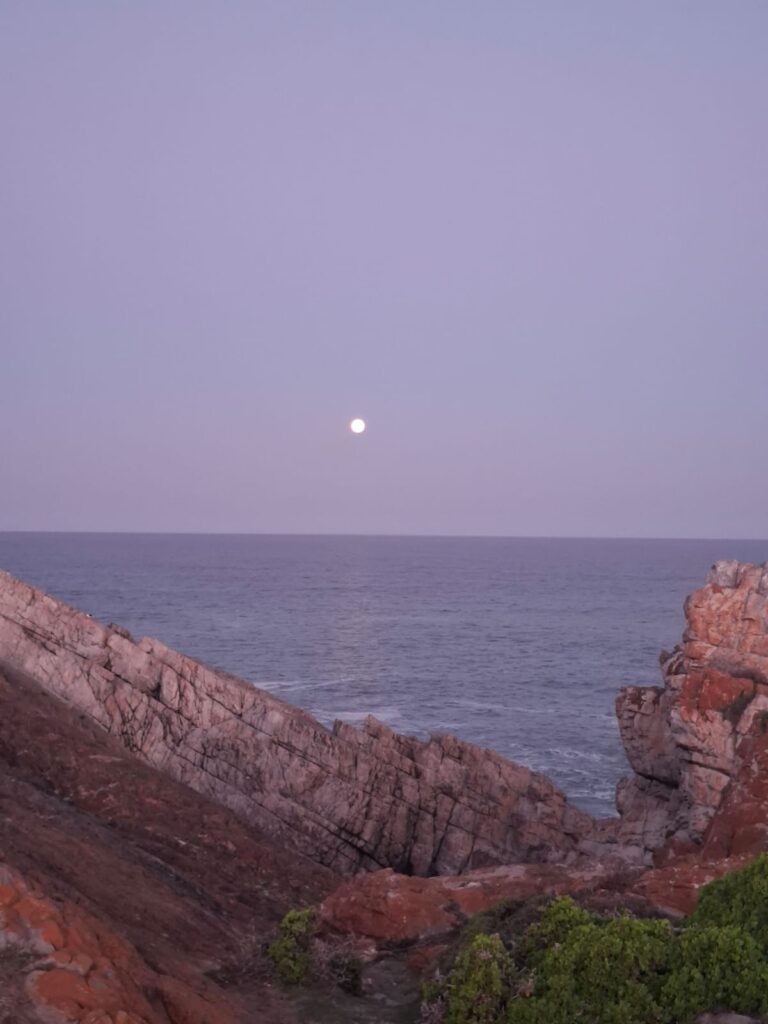
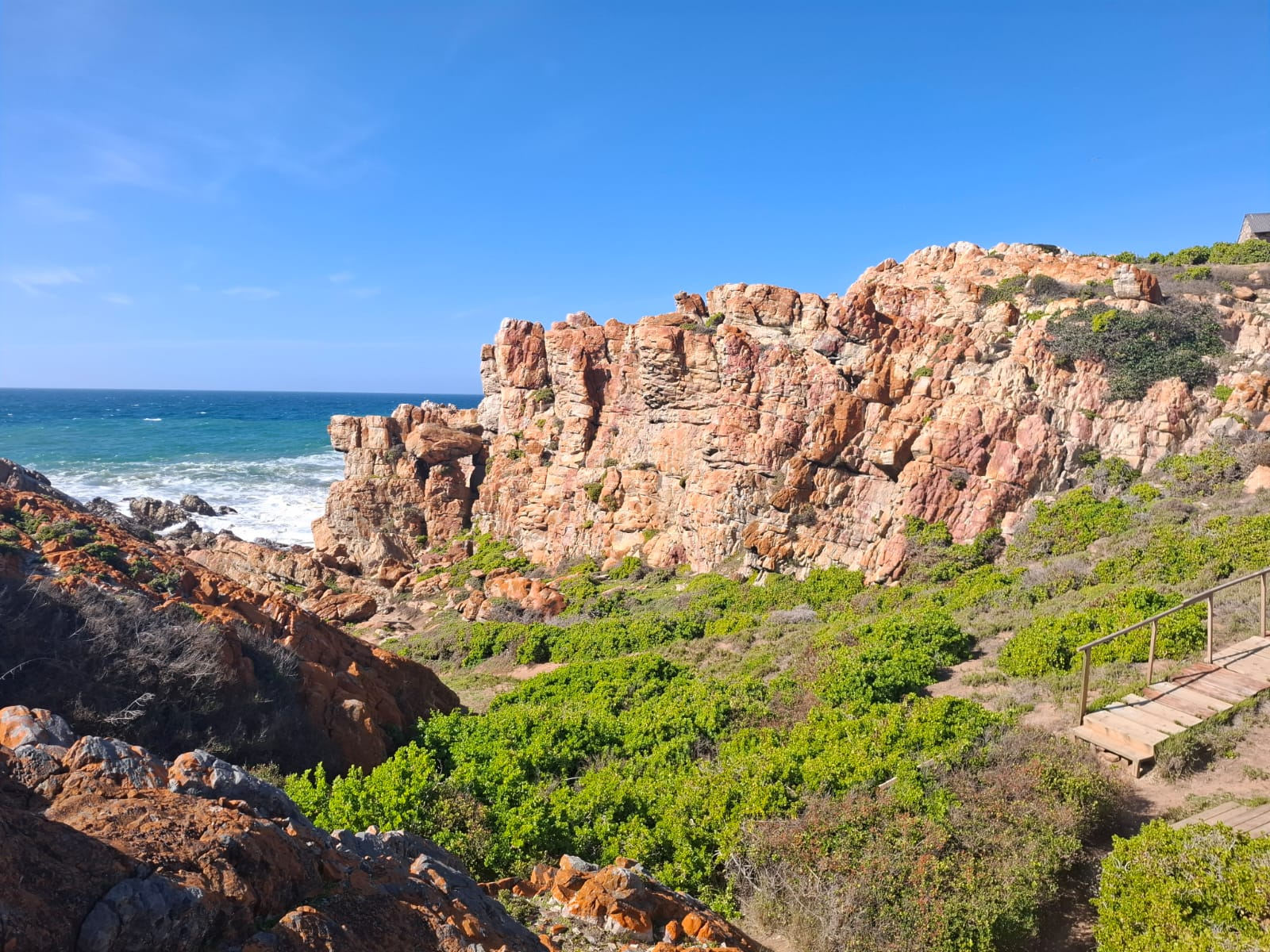
A Blue moon at Fransmanshoek
Compliance Management
Marine Living Resources Act
During May, the Rangers came across a total of 16 fishermen, recreational fishing, spearfishing/diving, and bait collecting permits were inspected by Divan, MC and Stefan in accordance with the Marine Living Resources Act (Act 18 of 1998). Of the 16 permits checked, all produce a valid permit, except for 1. We remind everyone that it is essential to be in possession of a permit, even if you are simply fishing for a day or two! We ask that if you witness any fishermen, divers, or bait collectors and suspect they are not following the rules and regulations, please get in touch with the Conservancy immediately.
Natural Resource Management
Alien invasive clearing
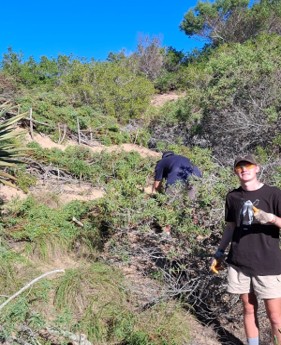
An essential component of Fransmanshoek’s natural resource management is the elimination of invasive alien plant species. Invasive species frequently lead to decreased biodiversity and the modification of natural ecological processes because they compete with native vegetation for water, nutrients, and space. Frequent alien clearing supports the return of native plant groups and preserves the area’s ecological integrity. The eradication of Rooikrans (Acacia cyclops), which are common in many Western Cape coastal locations, is a primary target of alien plant control. Rooikrans trees create dense stands that restrict the amount of habitat available for native species, suppress native flora. To stop its spread and promote the regrowth of native fynbos plants, Rooikrans were mechanically removed. Lantana (Lantana camara) and Monatoka (Myoporum tenuifolium) are two more invasive plants found in the region. Monatoka spreads quickly in coastal areas and can create dense thickets while Lantana is recognized for its aggressive growth and capacity to outcompete native species. These invasive species can be found in the area but are not as prominent as the Rooikrans wattles who are the most prominent. To ensure the long-term viability of restoration operations and to avoid the re-establishment of invasive species, ongoing monitoring and follow-up clearing are crucial. Controlling alien plants promotes better habitat quality, healthier ecosystems, and the preservation of native plants and animals. With an emphasis on Rooikrans (Acacia cyclops), the Fransmanshoek rangers actively engage in the eradication of invasive alien plant species. Alien clearing is done carefully to minimize disruption to the native wildlife and vegetation in the area. After the Rooikrans trees are removed, the cleared areas are routinely inspected to determine whether native plant species have recovered and to spot any indications of reinfestation.
Rangers using brush during alien clearing to combat erosion control
Erosion Control
Erosion is a critical aspect that can affect almost any property at almost any time. While the threat of erosion differs from property to property with some properties having a higher risk of erosion than others and some properties experiencing higher frequencies of erosion than others it still needs to be taken into account on almost every property that wishes to or already partakes in some forms of environmental conservation.
It should also be noted that erosion in itself is not always a complete negative as some forms of erosion are natural and not influenced by humans actively and in some cases erosion occurs in areas where the effects of the erosion do not cause any significant harm to human activities or the surrounding environment. Examples of destructive erosion would be a fast acting landslide and an example of harmless erosion would be the slow acting wearing of stones in the ocean or water courses.
With that being said the Fransmanshoek rangers took part in the control of erosion found on the conservancy. This erosion was a form of rill erosion which was caused by the run off of water from a gravel road. These small courses negatively impacted the surrounding area by preventing native vegetation from establishing there and caused a loss of top soil.
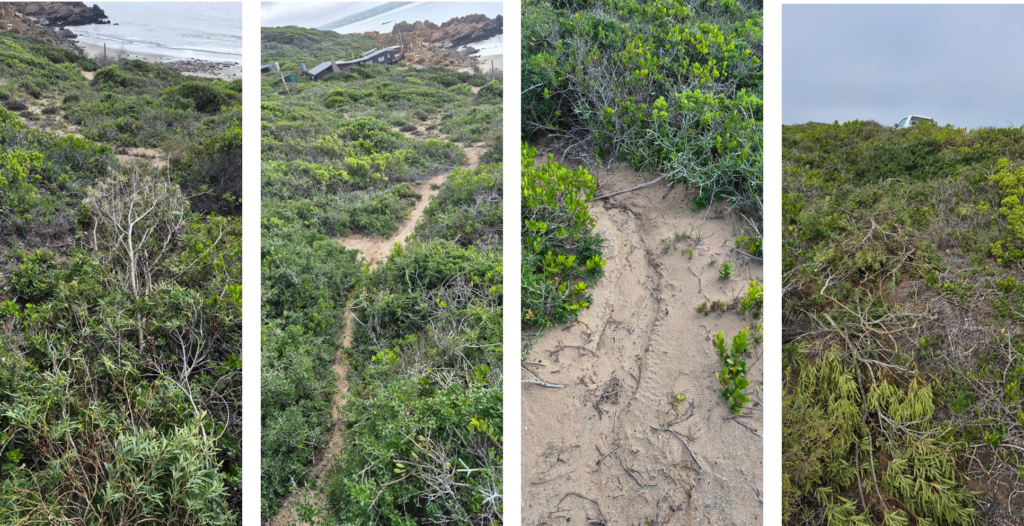
The effects of the erosion was controlled through a method called brush packing. This method involves making use of brush to form a barrier that can collect and catch any soil that may be lost through runoff; however , with the brush collecting the soil it will prevent the ultimate loss of the soil and can allow for the eventual buildup of soil that can be colonized later by vegetation. Additionally brush can also act as a barrier against rain as the brush will break the impact of any falling raindrops and thus soften the blow on the soil which gives the soil time to absorb the water rather than being harmed by the fast moving water. Many of the brush used by the rangers to prevent the effects of the erosion was collected from Rooikrans trees (Acacia cyclops) during or after alien clearing efforts. Ultimately this led to the support of two conservation efforts on the conservancy as erosion was controlled and hopefully prevented while also alien species were cleared. Both these initiatives helped to contribute to the conservation of the native fauna and flora of the Fransmanshoek Conservancy.
Brush packing at Fransmanshoek point.
Environmental Education
Controlled Burns
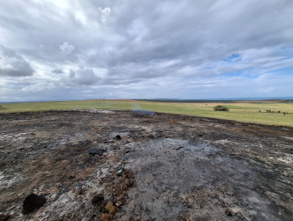
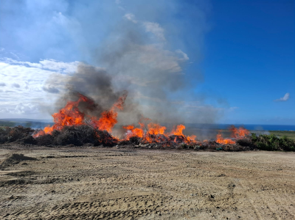
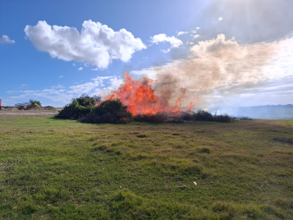
In the past month members of the conservancy namely the Springerbaai Eco Estate made use of controlled burns and the rangers were involved in the management of the burning.
Management of the burn primarily involved the observation of the burn itself as well as ensuring that once the burn is finished that fire and most if not all embers are also extinguished. In this way any unwanted burns can be prevented.
The main aim of the burn was to remove waste materials that have accumulated over the past few months. This waste primarily included garden waste, excess brush and any flammable material that was deemed as waste.
After most or all of the material was burned the process of extinguishing the remaining embers started. This included making use of a high pressure water hose to douse the charred ground, which is usually extremely hot after a burn such as this, and any areas that still show signs of burning ,which is usually indicated by bits of smoke or steams, and “heaps” which may still contain living embers underneath. These “heaps” are formed from burning material accumulating on top of each other and form excellent protection for embers despite being exposed to the environment and even to water. These “heaps” or burning areas were raked open with rakes as smaller embers were beaten with beaters. The exposed embers were then dosed with water, beaten or mixed with muddy, wet soil formed from the dousing.
After burnNearing end of burn Starting burn
It is important to note that while our rangers were involved, a controlled burn will always require a professional, qualified or experienced person on site and will always require the permission of the fire department. Even more importantly one should note that a braai does not qualify someone.
Sea Foam
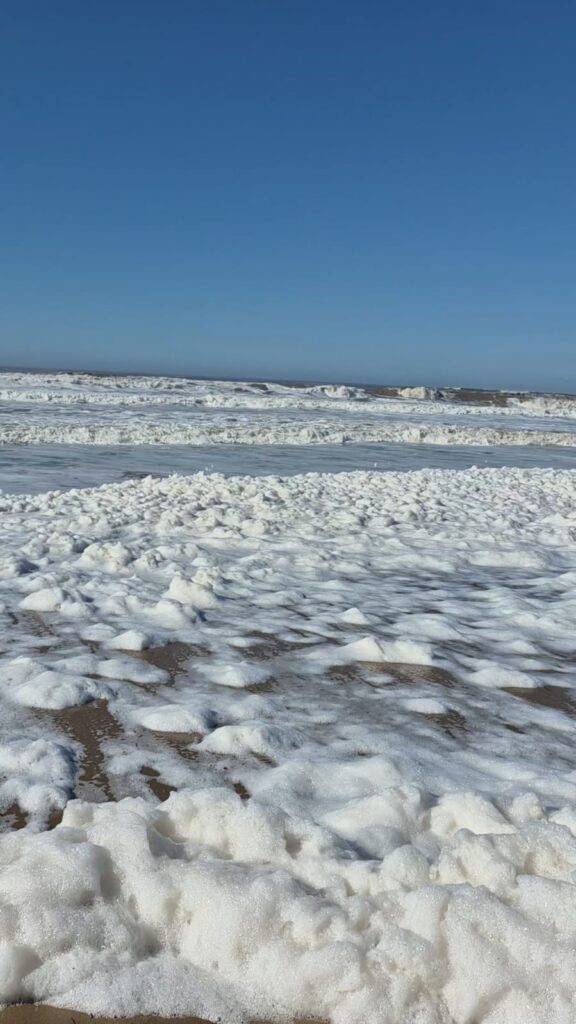
Sea foam is a naturally occurring phenomena that arises when wind and wave action agitate seawater that contains high quantities of dissolved organic materials. Phytoplankton, algae, kelp, seaweed, and other marine animals are the origins of this organic waste. These organisms discharge proteins, lipids, and other organic components into the water as they grow, die, and degrade. These substances function as organic surfactants, lowering the water’s surface tension and facilitating the formation of bubbles.
The amount of organic material that enters the ocean frequently rises after periods of intense rainfall. Nutrients, vegetation, and naturally existing organic matter are carried from the land into coastal waters by rivers, streams, and surface runoff. Large amounts of air become trapped in the water as a result of storms and strong winds creating choppy seas. Millions of small bubbles are created as the water and air are constantly mixed by the waves. Sea foam is created when these bubbles group together and can build up in protected coves, rocky shorelines, and beaches.
Sea foam can occur as enormous banks several meters deep or as small spots. Depending on the type and quantity of organic material present, it is typically white, cream, or light brown in color. Although foam is often associated with pollution, naturally generated sea foam is a widespread feature of coastal ecosystems worldwide, especially in locations with high marine productivity, after storms, and during algae blooms. Most of the time, it is a typical ecological process that illustrates how biological activity and physical ocean conditions interact.
Additionally, favorable fishing circumstances can be linked to natural sea foam. Foam buildup areas frequently serve as feeding zones, drawing baitfish and other small organisms drawn to the food sources. Fish activity along the beach may then increase as larger predatory fish move into these areas to feed. Because of this, anglers frequently view regions of concentrated sea foam and foam lines as lucrative spots to catch a range of fish species.
Sea foam
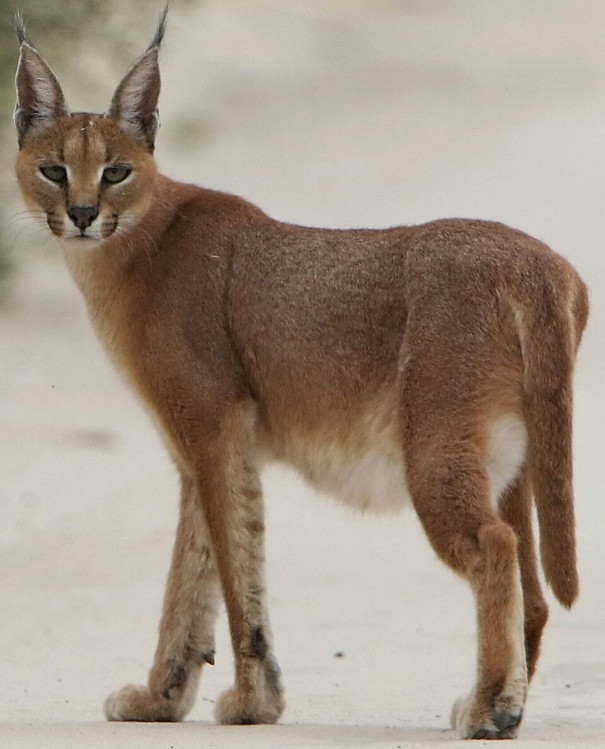
Monthly Species – Rooikat/Caracal
Rooikat/Caracal
Scientific name: Caracal caracal
Family: Felidae
Description: The caracal is a medium sized cat, generally much larger than a house cat, that has a slender body with a robust build. They can measure around 40 – 50 cm at the shoulder with males being generally larger than the females. They are tan to red in colour and have long legs with a short distinctively feline face and a tail that reaches the hocks. The canine teeth are usually long. One of their most iconic features is their long tufted ears.
Distribution: They are widely distributed, being found both in Africa and Asia however they are considered much more common in Africa and even more common in Sub Saharan Africa with them being considered rare in North Africa. In Sub Saharan Africa they are not found in tropical equatorial regions such as the Congo Basin. They have been noted to inhabit areas as far east as Western India and have been regularly noted to inhabit areas as far south as Cape Agulhas and Cape Point. They have also been seen in the Fransmanshoek Conservancy.
Habitat: Due to their wide distribution range they inhabit a wide range of different habitats. Generally they prefer habitats that are dry and have a low rainfall and ample available cover. They can be found in scrublands, semideserts, savannahs, forests, marshy lowlands and montane areas. They have been noted in the Ethiopian Highlands, such as in the Dogu’a Tembien massif, at elevations of around 3000 m. In Southern Africa they are common in biomes such the Nama Karoo, Succulent Karoo, Fynbos and arid savanahas. This also includes the mixed mosaic habitat of Fynbos and Albany Thicket found on the Fransmanshoek Conservancy.
Diet: They are carnivores and avid opportunistic hunters with cases of scavenging being few, infrequent and rarely observed. They primarily prey on birds and smaller mammals and even smaller or young antelope. They have been known to take down prey up to three times larger than themselves. The diet of each individual caracal will depend on the area they inhabit however, it is generally considered that up to 80% of their diets may consist of mammals with the remaining percentage potentially being made up of birds, like pigeons and francolins, reptiles, like lizards and snakes, insects and even scorpions. There were even recorded cases of individuals taking young kudus and adult springboks. Monkeys have also been observed as being prey for them. In Southern Africa some of the most common prey animals include Cape Grysbok, Steenbok, Common Duiker, Rock Hyrax and Cape Hare. They have even been known to target African Penguins in areas that are near penguin colonies. Due to their opportunistic nature they are well known for also targeting domestic animals such as livestock, like sheep, and pets such as house cats. Despite being carnivores they will occasionally consume plant material such as grasses and even grapes as this can help with the clearing of parasites and with the immune system.
Conservation Status: Caracals face many of the threats that many other species face within their range. This includes threats such as habitat loss and conflict with humans. Roads and vehicles also pose a significant threat to them throughout their range. In Asia they face threats from being illegally traded, such as for the pet trade, and conflict with farmers. However, in most of the countries in Asia where they are found the hunting of caracals is deemed illegal. The populations in Asia are mostly classified as critically endangered. In Africa and especially Southern Africa the populations are classified as least concern and much more widespread where they even inhabit human dominated areas such in parts of Cape Town. Due to their opportunistic hunting nature and their tendency to target livestock they will frequently come into conflict with humans and especially with livestock farmers. In South Africa conflict with caracals over livestock is well recorded and has been ongoing for many years with some of the earliest records of this conflict coming from the diary of Jan van Riebeeck dating to 1652 who described losses of sheep to “Roode Katten”. This conflict is also well documented in Namibia. This conflict can often lead to caracals being targeted and leading to them being killed. In South Africa farmers are encouraged to report sightings of caracals, both dead and alive, and livestock killed by caracals to the national Predation Management Information Centre. Despite the conflict and other threats, caracals are still classified as least concern throughout the region of Southern Africa and also in the country of South Africa where they are found throughout many protected areas and national parks where these areas sometimes support stable and healthy populations of caracals.
References
Nowak, R. M. (1999). “Caracal”. Walker’s Mammals of the World (6th ed.). Baltimore, Maryland, US: Johns Hopkins University Press. pp. 810–811. ISBN 978-0-8018-5789-8.
Estes, R. D. (2004). “Caracal”. The Behavior Guide to African Mammals: Including Hoofed Mammals, Carnivores, Primates (4th ed.). Berkeley, California, US: University of California Press. pp. 363–365. ISBN 978-0520-080-850.
Sunquist, F. & Sunquist, M. (2002). “Caracal Caracal caracal”. Wild Cats of the World. Chicago: University of Chicago Press. pp. 38–43. ISBN 978-0-226-77999-7.
Kingdon, J. (1997). The Kingdon Field Guide to African Mammals (2nd ed.). London, UK: Bloomsbury Publishing Plc. pp. 174–179. ISBN 978-1472-912-367.
Aerts, R. (2019). “Forest and woodland vegetation in the highlands of Dogu’a Tembien”. In Nyssen J.; Jacob, M.; Frankl, A. (eds.). Geo-trekking in Ethiopia’s Tropical Mountains. The Dogu’a Tembien District. GeoGuide. Switzerland: Springer International Publishing. pp. 261–277. ISBN 978-3-030-04954-6.
Gritsina, M. (2019). “The Caracal Caracal caracal Schreber, 1776 (Mammalia: Carnivora: Felidae) in Uzbekistan”. Journal of Threatened Taxa. 11 (4): 13470–13477.
Avenant, N.; Drouilly, M.; Power, R.; Thorn, M.; Martins, Q.; Neils, A.; Plessis, J. & Do Linh San, E. (2016). “A conservation assessment of Caracal caracal”. In Child, M. F.; Roxburgh, L.; Do Linh San, E.; Raimondo, D. & Davies-Mostert, H. T. (eds.). The Red List of Mammals of South Africa, Lesotho and Swaziland. South Africa: South African National Biodiversity Institute and Endangered Wildlife Trust. pp. 1–13.
Stuart, C.T. & Hickman, G. C. (1991). “Prey of caracal (Felis caracal) in two areas of Cape Province, South Africa”. Journal of African Zoology. 105 (5): 373–381.
Palmer, R. & Fairall, N. (1988). “Caracal and African wild cat diet in the Karoo National Park and the implications thereof for hyrax” (PDF). South African Journal of Wildlife Research. 18 (1): 30–34.
Grobler, J. H. (1981). “Feeding behaviour of the caracal Felis caracal (Schreber 1776) in the Mountain Zebra National Park”. South African Journal of Zoology. 16 (4): 259–262. doi:10.1080/02541858.1981.11447764.
Rhoda, L. (2023). The threat of terrestrial predators to mainland penguin colonies: searching for sustainable solutions (Master of Science in Biological Sciences). South Africa: Institute for Communities and Wildlife in Africa, Department of Biological Sciences, University of Cape Town.
Kohn, T. A.; Burroughs, R.; Hartman, M. J. & Noakes, T. D. (2011). “Fiber type and metabolic characteristics of lion (Panthera leo), caracal (Caracal caracal) and human skeletal muscle”. Comparative Biochemistry and Physiology A. 159 (2): 125–133. doi:10.1016/j.cbpa.2011.02.006. hdl:2263/19598. PMID 21320626.
Stefan Otto MC Prins Divan Breet FRANSMANSHOEK CONSERVANCY 082 084 2791 | fransmanshoek@gmail.com Like and Follow us on:@fmhconservancy
“Colors are the smiles of nature.”— Leigh Hunt Compliance Management Marine Living Recourses Act During August, the Rangers came across a total of 27 fishermen; recreational fishing, spearfishing/diving, and bait collecting permits were inspected by Stefan, MC and Divan in accordance with the Marine Living Resources Act (Act 18 of 1998). Of the 27 permits…
“Nature is not a place to visit, it is home.” – Gary Snyder Compliance Management Marine Living Resources Act During July, the Rangers came across a total of 52 fishermen; recreational fishing, spearfishing/diving, and bait collecting permits were inspected by Stefan, MC and Divan in accordance with the Marine Living Resources Act (Act 18 of…
“Adopt the peace of nature. Her secret is patience” – Ralph Waldo Emerson Compliance Management Marine Living Resources Act During June, the Rangers came across a total of 52 fishermen; recreational fishing, spearfishing/diving, and bait collecting permits were inspected by Stefan, MC and Divan in accordance with the Marine Living Resources Act (Act 18 of…