
“No will protect what they don’t care about and no one will care about what they have never experienced”

Compliance Management
Marine Living Resources Act
During March, the Rangers came across a total of 7 fishermen; recreational fishing, spearfishing/diving, and bait collecting permits were inspected by Stefan, MC and Divan in accordance with the Marine Living Resources Act (Act 18 of 1998). Of the 7 permits checked, no one failed to produce a valid permit. We remind everyone that it is essential to be in possession of a permit, even if you are simply fishing for a day or two! We ask that if you witness any fishermen, divers, or bait collectors and suspect they are not following the rules and regulations, please get in touch with the Conservancy immediately.
New Senior Ranger

Hi, I’m Stefan Otto, the new Senior Ranger at Fransmanshoek Conservancy. I’m excited to join the team and contribute to improving our natural environment.
Natural Resource Management
Tree planting at Springerbaai Coastal Eco-Estate
On Wednesday, the 25th of March, Fransmanshoek Conservancy had the opportunity to partake in the tree-planting initiative at Springerbaai Coastal Eco-Estate for International Forest Day. Every year the world comes together to celebrate the International Day of Forests, a global reminder of just how essential forests are to life on Earth. From the air we breathe to the livelihoods of billions, forests quietly support both natural ecosystems and human societies in
ways we often take for granted. This day isn’t just about appreciation, it’s about action. It calls on individuals, communities, and governments to recognize the urgent need to protect and sustainably manage our forests for future generations.
The Role of Forests in a Changing Climate
Forests are among the planet’s most powerful allies in the fight against climate change. Acting as massive carbon sinks, they absorb billions of tonnes of carbon dioxide each year, helping to regulate global temperatures and stabilize our environment. Without them, the impacts of climate change would be far more severe.
Supporting Livelihoods and Economies
More than 5 billion people worldwide rely on forests for their daily needs, whether for food, medicine, fuel, or income. In many rural and developing areas, forests are directly tied to survival and economic stability. The 2026 theme, “Forests and Economies,” highlights how sustainable forest management can drive long-term economic growth while protecting natural resources. It’s a powerful reminder that environmental conservation and economic development can-and must-go hand in hand.
A Haven for Biodiversity
Forests are home to an incredible 80% of terrestrial species, making them one of the most biodiverse ecosystems on Earth. Beyond wildlife, they play a crucial role in maintaining ecological balance by regulating water cycles, enriching soils, and filtering the air we breathe.
Turning Awareness into Action
The International Day of Forests encourages more than just reflection, it inspires action. From tree planting initiatives to large-scale restoration projects, this day promotes meaningful steps toward reversing deforestation and ensuring forests continue to thrive.
Education for a Sustainable Future
At the heart of long-term forest conservation is education. By increasing awareness and understanding of sustainable practices, we empower communities to protect biodiversity and manage forest resources responsibly.
Looking Ahead
As we observe the International Day of Forests 2026, the focus on “Forests and Economies” reinforces a crucial message: healthy forests are not just an environmental priority, they are an economic one too. Protecting them is an investment in our planet, our people, and our future.

Environmental Education
The importance of snakes and how to avoid them
Snakes play an important role in maintaining the health of an ecosystem, especially in areas where a lot of rodents are present. As both predators and prey, they help to regulate populations of small animals like rodents, that can become pests, damage crops and spread diseases. By controlling the population of rodents, snakes contribute to the ecological balance and support biodiversity. Snakes are also a food source for other animals like birds of prey and larger mammals.
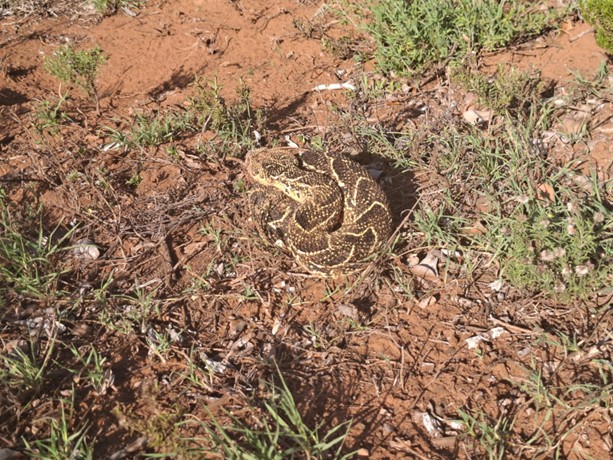
The snakes most commonly encountered in the western cape are Cape Cobras, Puff Adders, and the Boomslang. These species are not aggressive most of the time and will avoid humans if possible. Most snake encounters happen when people unknowingly step close to a well camouflaged snake or attempt to handle them. Being aware of your surroundings is crucial to avoiding snakes, particularly when strolling through natural regions like grasslands or fynbos.
Some protection can be obtained by wearing long pants and closed shoes, and you can alert snakes to your presence by moving plants ahead of you with a stick. If they detect vibrations, the majority of snakes will retreat. Additionally, it’s crucial to keep your hands and feet out of places where you can’t see well,
like beneath logs, boulders, or thick foliage. Snakes are less likely to be drawn to the area around homes or campers if the grass is kept short, waste is removed, and rodent populations are managed. The safest course of action when faced with a snake is to maintain composure, maintain a safe distance, and let the snake go on its own. It is not advised to try to kill or handle a snake because doing so increases the chance of getting bitten.
Monthly Species Profile – Bottlenose dolphin
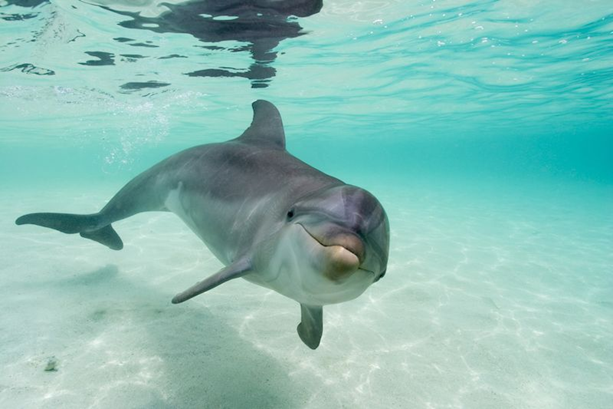
Scientific name: Tursiops aduncus
Family: Delphinidae
Description: The Indo-Pacific Bottlenose Dolphins is a highly intelligent marine mammal commonly found in coastal and offshore waters around the world. It is easily recognised by its smooth grey body, curved dorsal fin, and short, rounded “bottle-shaped” snout. Indo-Pacific Bottlenose Dolphins are social animals that live in groups called pods and communicate using clicks, whistles, and body movements. They are active predators, feeding mainly on fish and squid, and are known for their playful behaviour, often seen riding waves or leaping out of the water.
Distribution: The Indo-Pacific Bottlenose Dolphin is widely distributed in tropical and temperate oceans around the world. It occurs in both coastal areas, such as bays and estuaries, and in deeper offshore waters. In South Africa, it is commonly found along the coastline, especially in warmer waters where food is
abundant.
Diet: Mostly feed on fish and squid. By using echolocation they mostly hunt together.
Life cycle: The Indo-Pacific Bottlenose Dolphin has a long life cycle and gives birth to live young after a gestation period of about 12 months. Usually a single calf is born, which is cared for by the mother for several years. Calves stay close to their mothers to learn feeding and social behaviours, and dolphins can live up to 40–50 years in the wild.
Conservation Status: Indo-Pacific Bottlenose Dolphin are data deficient when it comes to their conservation status but are commonly seen at Fransmanshoek.
Stefan Otto
MC Prins
Divan Breet
FRANSMANSHOEK CONSERVANCY
082 084 2791 | fransmanshoek@gmail.com
Like and Follow us on: @fmhconservancy