
Steve Irwin: “We don’t own the planet Earth, we belong to it. And we must share it with our wildlife.”
Compliance Management
Marine Living Resources Act
During September, the Rangers came across a total of 27 fishermen; recreational fishing, spearfishing/diving, and bait collecting permits were inspected by Stefan, MC and Divan in accordance with the Marine Living Resources Act (Act 18 of 1998). Of the 15 permits checked, two (two) failed to produce a valid permit. We remind everyone that it is essential to be in possession of a permit, even if you are simply fishing for a day or two! We ask that if you witness any fishermen, divers, or bait collectors and suspect they are not following the rules and regulations, please get in touch with the Conservancy immediately.
Fransmanshoek Conservancy and The Department of Fisheries (DFFE) conducted a joint patrol during the month of September, stretching from Springerbaai Coastal Eco-Estate to Gouritzmond. During the operation 2 (two) individuals were found harvesting with expired permits. The two individuals were given the option to purchase new permits through the new online system. We would like to thank DFFE for their contribution and we look forward to future joint patrols alongside them.
Natural Resource Management
Nature’s Tiny Ecosystems
Have you ever noticed strange, swollen growths, bumps or woody structures on the branches and stems of Rooikrans (Acacia cyclops)? These structures are known as galls.
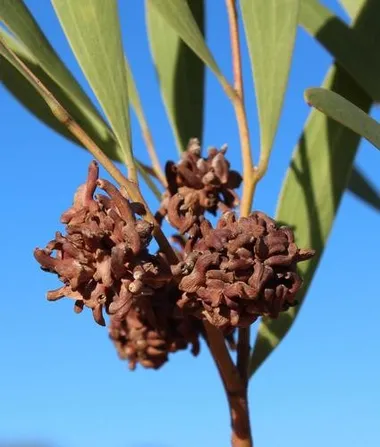
A gall forms when another organism, often a tiny insect or mite, interacts with the plant and causes it to produce abnormal tissue. The gall effectively becomes a small living shelter and food source for the organism developing inside it. In 2003 the Rooikrans flower-galling midge (Dasineura dielsi) was introduced from Australia as a biological control agent to reduce the spread of Rooikrans along with the seed-consuming weevil (Melanterius servulus).
In the 1830’s Rooikrans (Acacia Cyclops) were introduced to South Africa to help sand dune stabilization and infrastructure protection, but since then it has become a major problem causing degradation of biodiversity and ecosystems. The insects were then introduced to help curb the massive seed production of the Rooikrans.
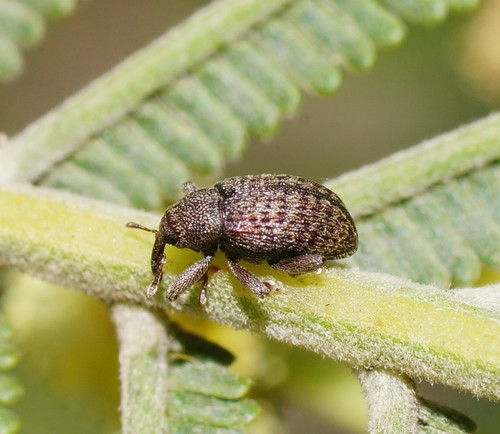
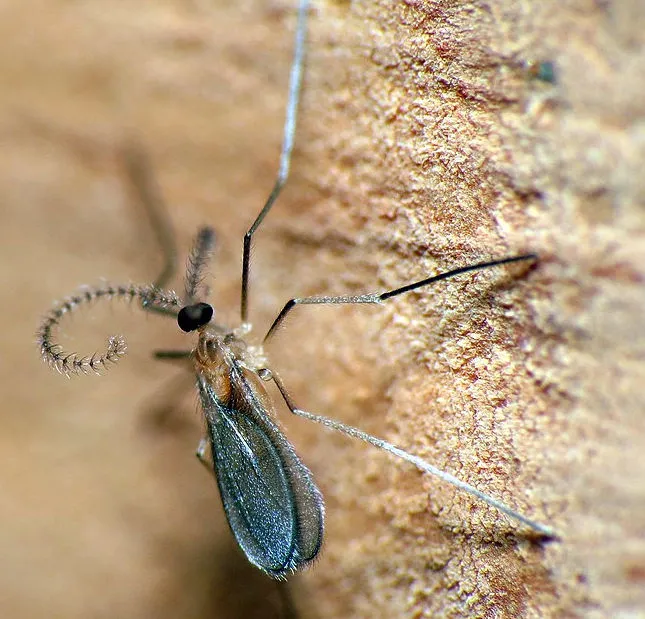
The seed-consuming weevil serves as a vital biological control agent by targeting the reproductive cycle of Rooikrans (Acacia cyclops). Adult females deposit their eggs directly into young seed pods, and upon hatching, the larvae burrow into and feed on the developing seeds. Multiple seeds within a single pod can be destroyed, significantly diminishing the quantity of viable seed released into the environment. Over time, reducing the seed bank curtails subsequent germination and recruitment, which helps curb the spread and persistence of Rooikrans populations.
The Rooikrans flower-galling midge (Dasineura dielsi) plays another crucial role. Female midges lay eggs within flower buds, where hatching larvae manipulate the floral tissues to produce abnormal structures known as galls. These galls disrupt standard floral development and prevent seed pods from forming, directly impairing the plant’s overall reproductive capacity.
Biological control is an ongoing, long-term strategy rather than an immediate fix. Instead of eradicating alien plants outright, it aims to lower their reproductive output, density, and competitive edge. Combining biocontrol with mechanical clearing, follow-up efforts, and continuous monitoring forms a comprehensive strategy known as Integrated Alien Plant Management.
Utilising these joint measures gradually suppresses the ability of Rooikrans to regenerate, allowing native vegetation an opportunity to recover. Ongoing cooperation among landowners, conservancies, researchers, and environmental organisations remains essential for keeping invasive species in check and protecting our coastal ecosystems.
Although Rooikrans is an invasive alien species in South Africa (NEMBA Category 1(b) ), the plants and the organisms associated with them can still provide interesting opportunities for learning about ecological interactions. Galls are a good reminder that even an apparently simple plant can support a surprisingly complex web of small organisms.
Environmental Education
International beach clean-up day
International Beach Clean-up Day was a great opportunity for the communities of Vleesbaai and Boggomsbaai to come together and support the rangers in keeping our coastline clean. Community members joined the rangers for a beach clean-up covering the coastline from Vleesbaai to Boggomsbaai. Together, they collected litter and waste that had accumulated along the beach, helping to restore the natural beauty of the area and making the coastline a cleaner and safer place for people and wildlife.
Keeping our beaches clean is important because litter can have a negative impact on marine life, birds and other animals that depend on the coastal environment. Plastic, fishing line, packaging and other waste can be swallowed by animals or cause them to become trapped or injured. Clean beaches also provide a better environment for the community and visitors to enjoy. By removing waste and preventing litter from entering the ocean, beach clean-ups help protect the coastal environment and raise awareness about the importance of responsible waste management.
A special thank you goes out to everyone from Vleesbaai and Boggomsbaai who came out to support the rangers on International Beach Clean-up Day. Your time, effort and willingness to help made a meaningful difference to the coastline between the two communities. It was great to see the community working together to care for and protect the natural environment that we all share. Thank you to everyone who participated and helped make the clean-up a success!
Monthly Species Profile
Cape Gannet / Malgas
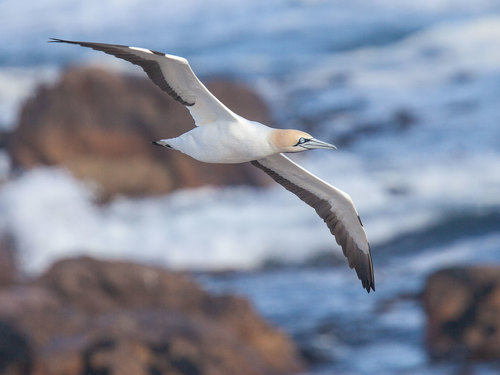
Scientific name: Morus capensis
Family: Sulidae
Description: Cape Gannets are medium to large sized birds who are primarily white with black accents and their distinctive pale yellow heads and eyes that have a striking blue ring.
They can easily be spotted, especially in flight, with their snow white bodies and their dark coloured tails and dark coloured primary and secondary flight feathers.
When looking at their heads they have pale yellow or golden feathers on the crow which run down to the nape which fades into white further down the neck. Their bills are large and distinctive and are darker than the colour of the body, usually a pale greyish white. The bill has no external nostrils. They also have very noticeable eyes which are surrounded by a blue ring. Most of the facial features are lined by black accents or stripes with one stripe running down the neck for a short distance.
Their dark coloured feet are webbed and are also very noticeable against their white bodies especially when walking or even flying.
The chicks vary significantly from the adults and can be easily distinguished from each other. Most chicks, juveniles or immature individuals are black or very dark brown in colour with them developing their white, yellow and black feathers as they mature.
Generally the adult birds are 84-94 cm in length and have a 171-185 cm wingspan. They can weigh around 2.6 kg
Distribution: Cape Gannets are nearly endemic to southern Africa due to all of their known breeding colonies being in this area. The non-breeding range can be much further afield due to vagrancy.
Their breeding range in southern Africa is only in two countries, namely Namibia and South Africa. These consist of six breeding colonies all consisting of islands. Three of the islands are in Namibia and three islands are in South Africa. Two of the South African islands are in the Western Cape and one is in the Eastern Cape while all three of the Namibian islands are in the //Karas Region.
The non-breeding range of Cape Gannets extend along the west coast of Africa all the way to the Gulf of Guinea in western Africa and along the southern and eastern coasts of Africa their non-breeding range reaches Mozambique and even Tanzania, Zanzibar and a small southern section of Kenya.
Cape Gannets have been noted to become vagrants and it is because of this vagrancy that they are sometimes found in areas very far away from their known range. This includes individuals being sighted in areas as far north as Europe such as the Azores and potentially countries such as Spain and even Ireland and Britain. These vagrant birds are also known to reach parts of Australia, such as the Australian state of Western Australia and even as far east as the state of Victoria, where the Cape Gannets have been known to interact with the local Australasian Gannets, the two of which are sometimes hard to distinguish especially when the Cape Gannets sometimes land in the breeding colonies of Australasian Gannets.
Their range in South Africa includes various protected areas such as the Namaqua National Park, the West Coast National Park, Addo Elephant National Park, De Hoop Nature Reserve and can also sometimes be seen in the Fransmanshoek Conservancy.
Diet: Cape Gannets are strict carnivores, specifically piscivorous carnivores which means that they eat almost just fish. However they have also been known to occasionally target cephalopods such as squid and even scavenge fish such as those thrown over by boats.
When hunting they will usually search for large schools or shoals of fish. These birds are very powerful fliers which allows them to follow the fish or stay in the air for some time at heights of 10 or even 30 m. They use their excellent binocular vision in order to spot the shimmering of fish near the surface.
They will then perform their iconic dive into the water in order to catch the fish which involves tucking in their feet and wings close to their bodies. These dives can reach speeds at around 40-86 km/h and they enter the water at such a force that it is for this reason that it is believed that these birds lack external nostrils because it prevents water from entering the body by being forced through the nostrils. The lack of external nostrils prevents this from happening.
Their bill has fine serrations on its tip which helps them catch the fish.
Once in the water they will often use their wings and feet to swim around to catch fish. They are able to reach depths of around 20 to 30 m because of their dive and by swimming. They can catch multiple fish in a single dive which are then eaten either underwater or on the water’s surface. Fish can also be partially digested and stored in the stomach which can then be taken back and used to feed the chicks.
Cape Gannets primarily hunts Anchovies and Sardines. Other targeted species include Mackerel, Atlantic Saury and Squid. They will also consume hake which is often scavenged from fishing vessels.
Life cycle: The average life span of the cape gannet ranges between 10 – 20 years, with the exemption to ringed individuals living up to 30 years.
The Cape Gannets generally reach sexual maturity at around 4–5 years of age and form long-term pair bonds (monogamous). During the breeding season, adults return to established colonies where they engage in courtship, nest building and territorial displays. Females usually lay a single egg, which is incubated by both parents for approximately 42–46 days.
After hatching, the chick is cared for by both parents. The adults take turns guarding the chick and to forage at sea, returning to the colony to feed the young bird by regurgitating partially digested fish. Chicks grow rapidly and develop their flight feathers before fledging at approximately 95–105 days old. Once fledged, juveniles gradually become independent but remain distinguishable from adults by their mottled brown-and-white plumage.
Cape Gannets undergo a gradual change in plumage as they mature, becoming increasingly white with black wing markings and a distinctive yellow-orange
head and pale blue bill. Young birds spend their first years at sea before returning to breeding colonies as adults.
Conservation Status: Cape gannets are classified as an endangered species.
Cape Gannets in South Africa have been affected by changes in the distribution of their main prey, contribution to population declines on the West Coast and increases in Algoa Bay. Food shortages can cause chick starvation, while reliance on fishery discards reduces chick growth and survival. The species is also threatened by oil spills and chronic oiling, with oil bickering near Port of Ngqura increasing this risk, particularly because more than half of the global population occurs in Algoa Bay.
Predation by Cape fur seals, Great White Pelican and kelp gulls, which can reduce breeding success. They are also affected by accidental bycatch in fishing industries, severe atoms that can kill chicks, and disease outbreaks such as Avian Influenza which has caused significant mortality.
References
BirdLife International (2018). “Morus capensis“. IUCN Red List of Threatened Species. 2018
del Hoyo, Josep; Elliott, Andrew; Sargatal, Jordi; Christie, David A.; de Juana, Eduardo, eds. (2013).
Beak Protects during Dives: Cape Gannet, AskNature
Patterson, S.A.; Morris-Pocock, J.A.; Friesen, V.L. (2011). “A multilocus phylogeny of the Sulidae (Aves: Pelecaniformes)”. Molecular Phylogenetics and Evolution. 58 (2): 181–91.
Nelson, J. Bryan (2010) [1978]. The Gannet. London: A&C Black. p. 18.
Gill, Frank; Donsker, David, eds. (2025). “Storks, frigatebirds, boobies, darters, cormorants”. World Bird List Version 15.1. International Ornithologists’ Union. Retrieved 22 July 2025.
Menkhorst, Peter; Rogers, Danny; Clarke, Rohan; Davies, Jeff; Marsack, Peter; Franklin, Kim (2019). The Australian Bird Guide (Revised ed.). CSIRO Publishing. pp. 166–167.
Paterson A.M. and N.J. Riddiford (1990). “Does the Cape Gannet Enter European Waters?” British Birds 83(12):519–526.
Crochet, Pierre-André and Marcel Haas (2008). Western Palearctic list update: deletion of Cape Gannet Dutch Birding 30(2):103–4.
Alfrey, Peter; Legrand, Vincent. Azores Rare and Scarce Birds Report 2016 (PDF) (Report). Azores Bird Club. p. 22.
Jones, Josh (21 January 2017). “The top 10 Western Palearctic vagrants of 2016”. Birdguides.
Garner, Martin (26 September 2007). “Focus On: identification of Cape Gannet”.
Viles, Sam (16 December 2020). “Review of the Week: 9-15 December 2020”. Birdguides
Sherley, R. B., Crawford, R. J., Dyer, B. M., Kemper, J., Makhado, A. B., Masotla, M., … & Winker, H. (2019). The status and conservation of the Cape Gannet Morus capensis. Ostrich, 90(4), 335-346.
Sherley, R. B., Crawford, R. J., Dyer, B. M., Kemper, J., Makhado, A. B., Masotla, M., … & Winker, H. (2019). The status and conservation of the Cape Gannet Morus capensis. Ostrich, 90(4), 335-346.
Buck, J (2025) Rooikrans Biocontrolhttps://gouritz.com/rooikrans-biocontrol/. Gouritz Biocluster Biosphere Reserve.
Stefan Otto
MC Prins
Divan Breet
FRANSMANSHOEK CONSERVANCY
Like and Follow us on: @fmhconservancy
082 084 2791 | fransmanshoek@gmail.com